


DRIVE THROUGH
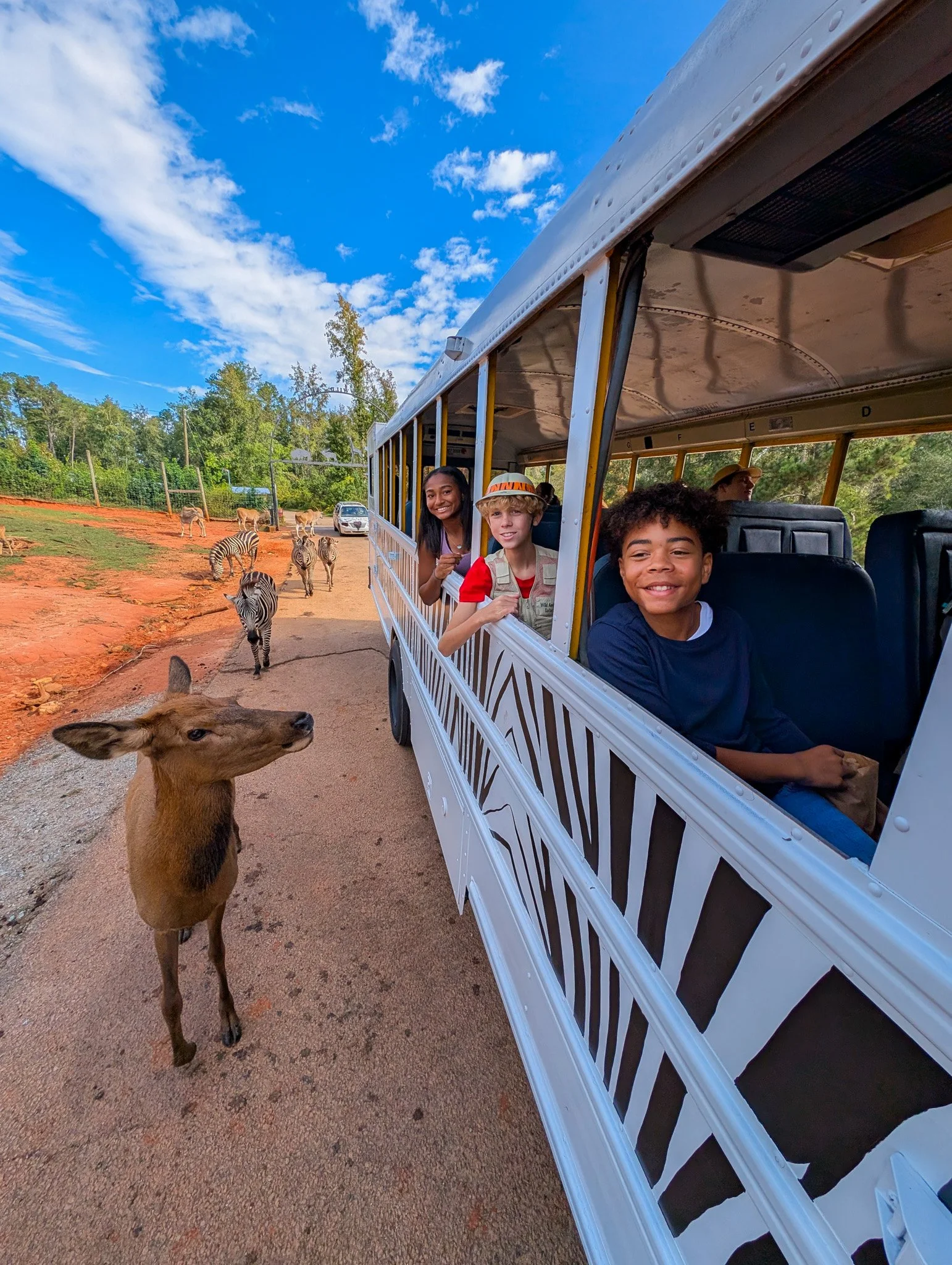
Embark on a wild adventure at Wild Animal Safari in Georgia! Drive through over 250 acres of scenic trails and feed zebras, llamas, bison, and more, all from the comfort of your vehicle OR one of our comfortable rentals. With 300+ exotic animals, it’s an unforgettable safari experience!
Use this guide to find out more about the animals you’ll see in the park
AOUDAD
Conservation Status: Vulnerable & decreasing
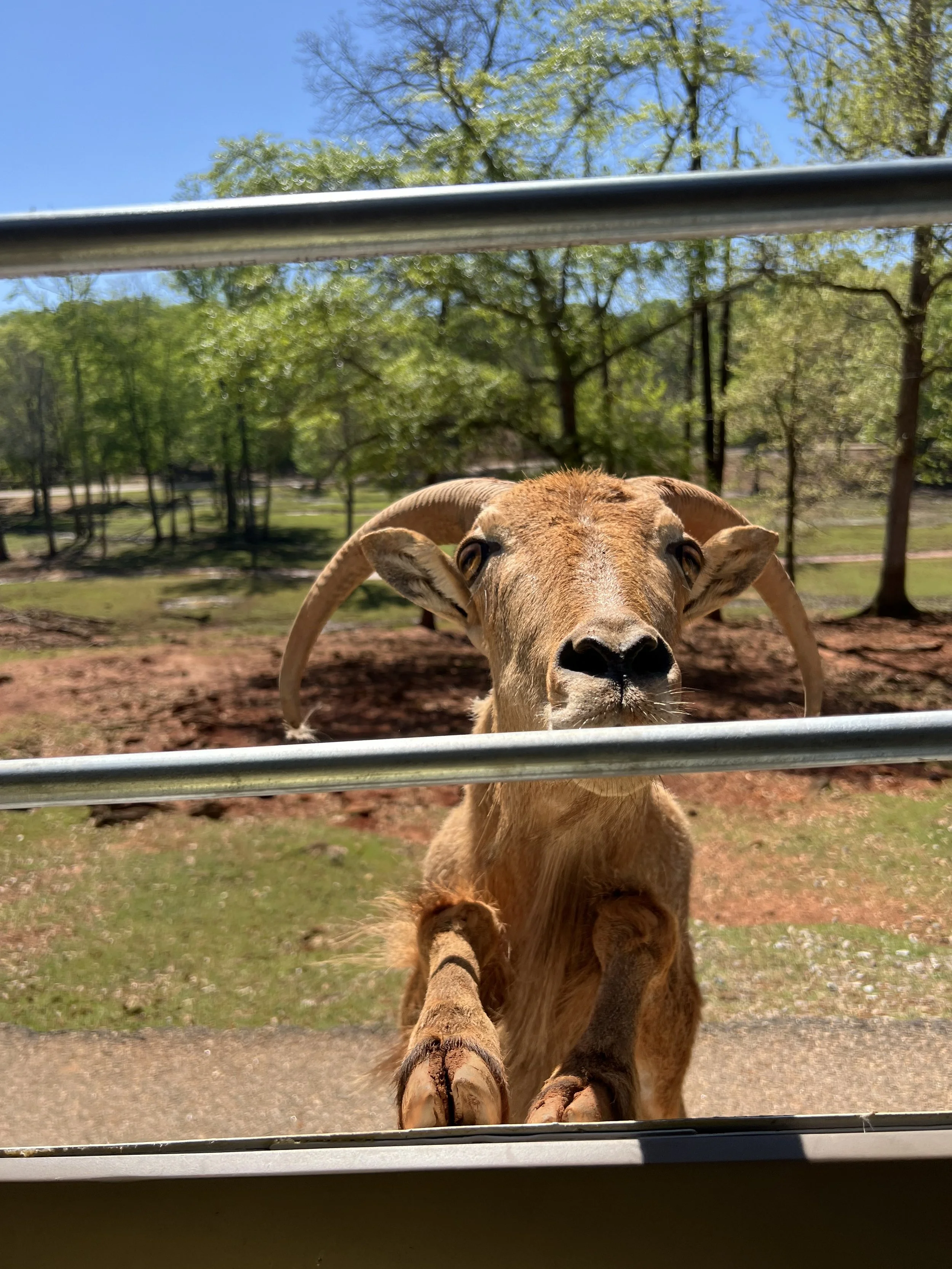
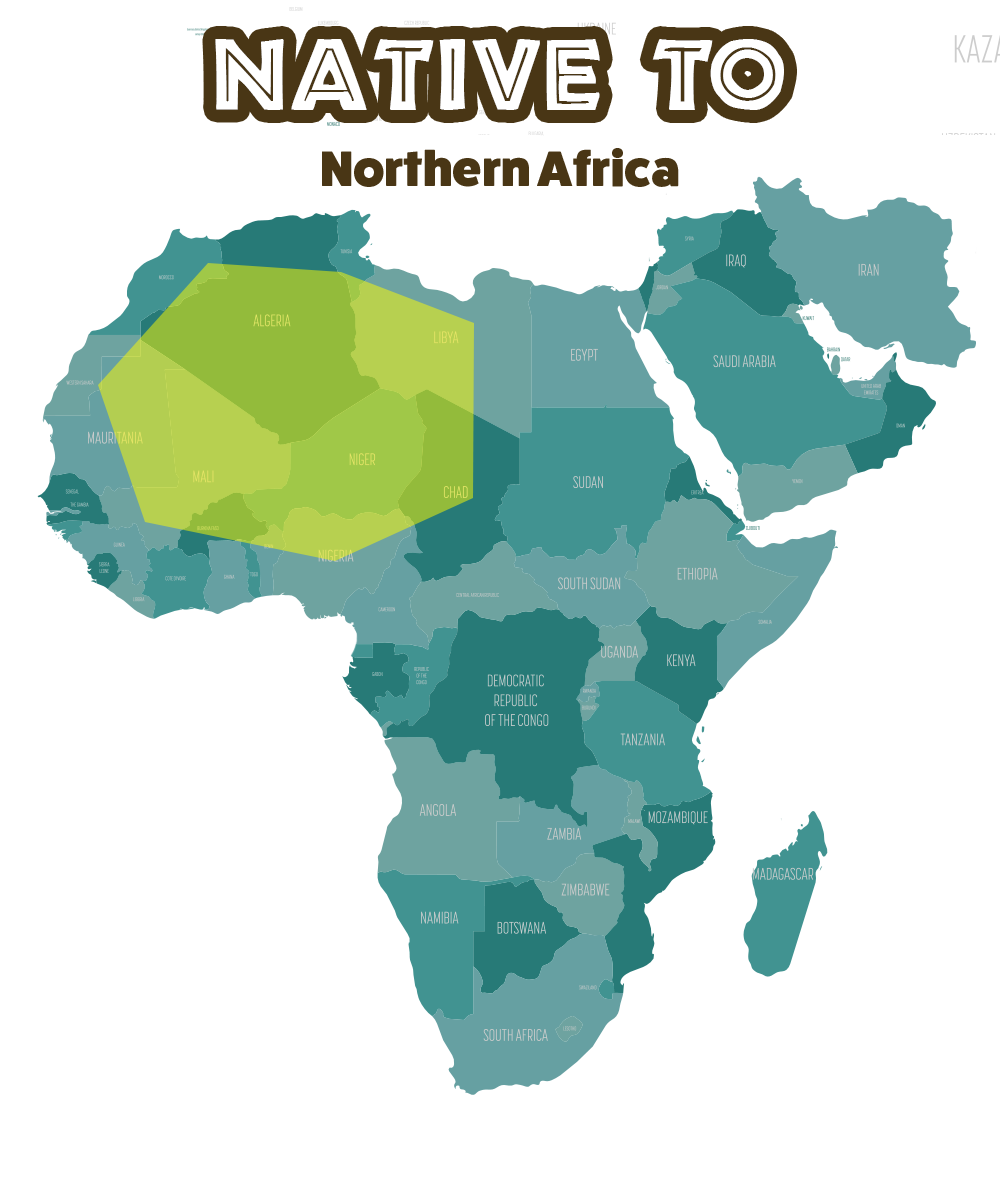
Aoudad, also known as Barbary Sheep, are goatlike mammals of the family Bovidae. This species has been inappropriately called a sheep. Recent genetic information reveals that they are more closely related to wild goats. They are native to the rocky mountains of North Africa. Although rare in its native country of North Africa, it was introduced to both North America and southern Europe, as well as other places. They live in arid hills and mountainous areas. Within this rugged, rocky terrain. Living in desert areas, these sheep are usually most active during dawn and dusk, attempting to remain in the shade or shelter during the day when it is hot.
Fun Facts!
When threatened, they usually do not run from a predator but stand extremely still so that they blend in with the surroundings.
In America they can often be observed fighting with Bighorn Sheep
The horns of these sheep consist of keratin and they continue to grow throughout their lifetime. Each winter a new growth ring appears.
AXIS DEER
Conservation Status: Least Concern
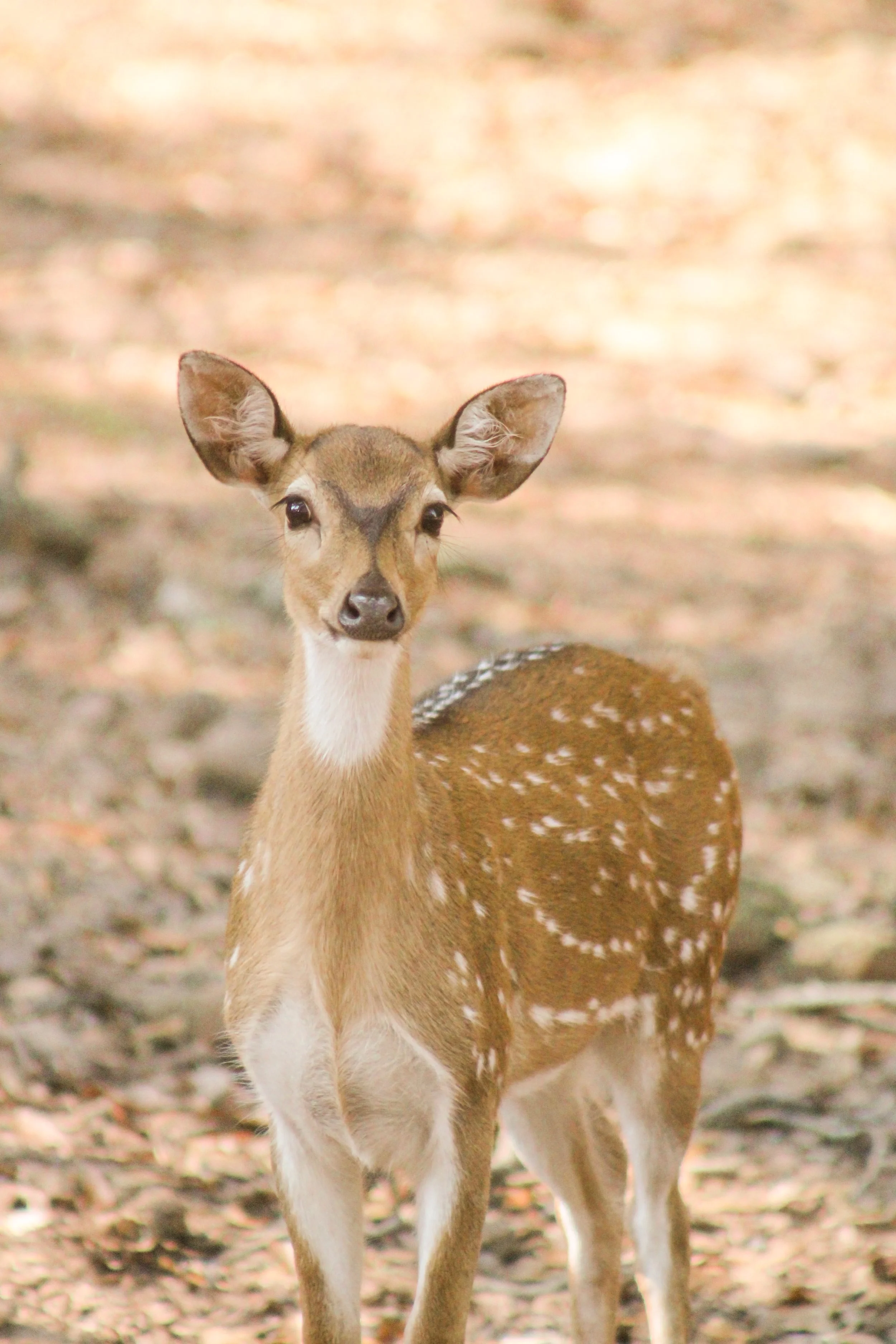
Most of the Axis deer population are located in the forests of India. They have also been introduced to the USA and Australia as well. They live in dense forests, forested valleys and can also be found in open grasslands, savannas, and plantations. Short grasslands are an important area for them due to a lack of cover for predators such as the tiger.
BISON
Conservation Status: Near threatened
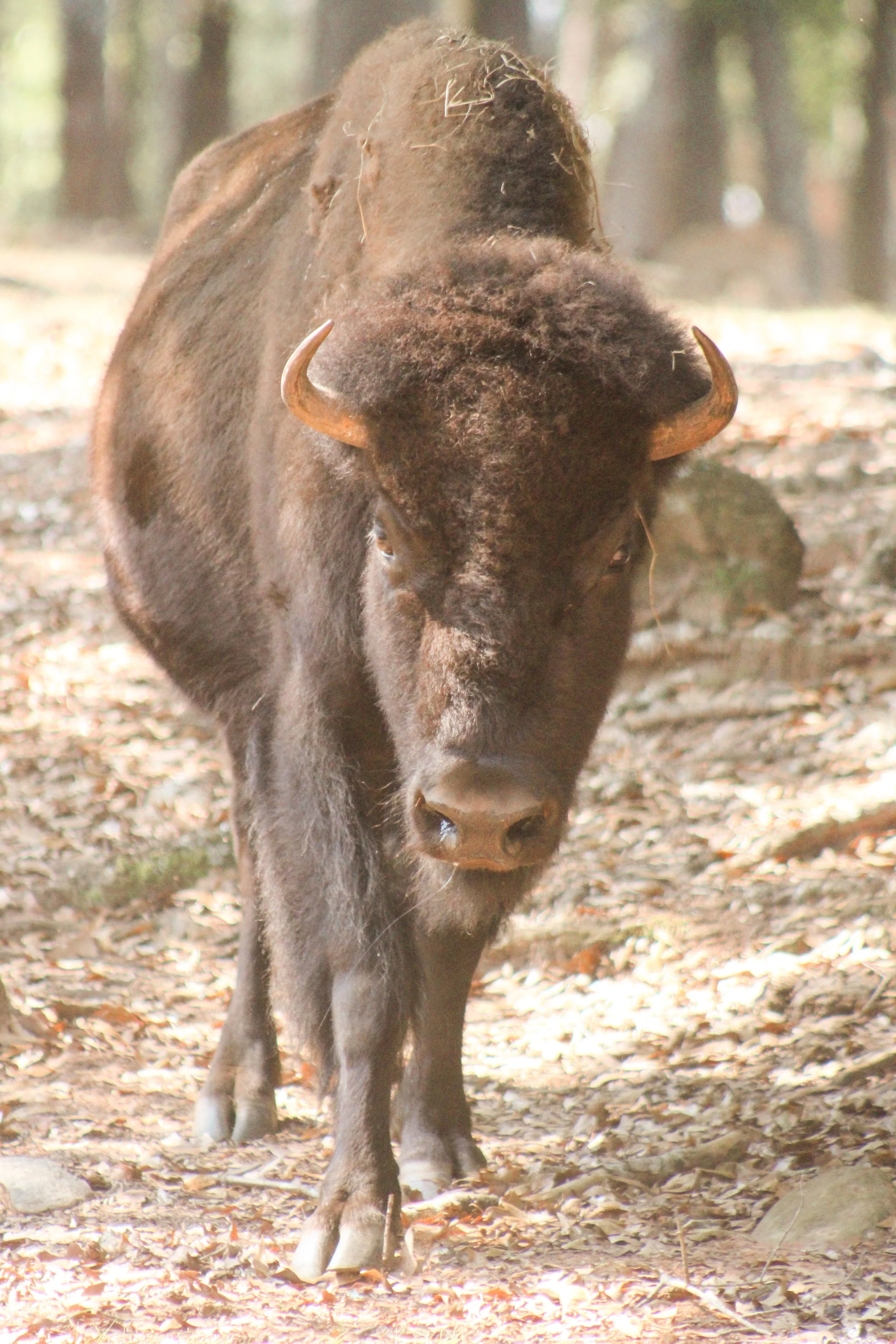
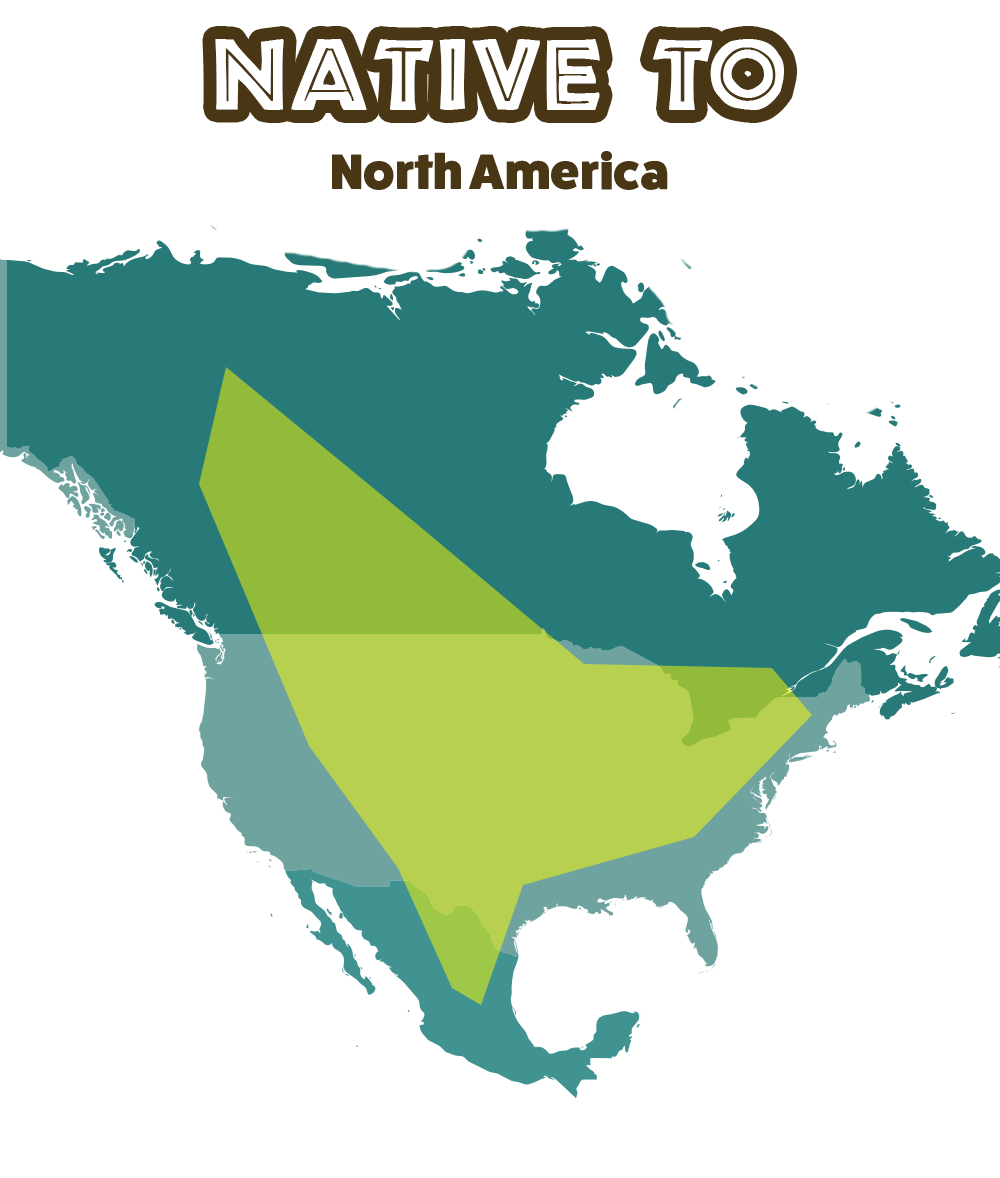
Historically bison lived in the rich grassland that ran from Alaska to the Gulf of Mexico. It stretched east to the Atlantic Seaboard, as far north as New York, and south to Georgia. Although in the past, a huge number of bison thundered from Mexico to Alaska; mass killings of these animals led to their near total extinction. However, the bison survived and currently they live primarily in Canada and the western part of the USA, mainly in protected areas and national parks. Through multiple reintroductions, the species now freely roams wild in several regions in the United States, Canada, and Mexico, with it also being introduced to Yakutia in Russia.
Fun Facts!
Bison are excellent jumpers, able to jump up to 6 feet off the ground.
On May 9, 2016, President Obama signed the National Bison Legacy Act into law, officially making the American bison the national mammal of the United States.
Bison are the largest mammal in North America.
Blackbuck
Conservation Status: Near Threatened
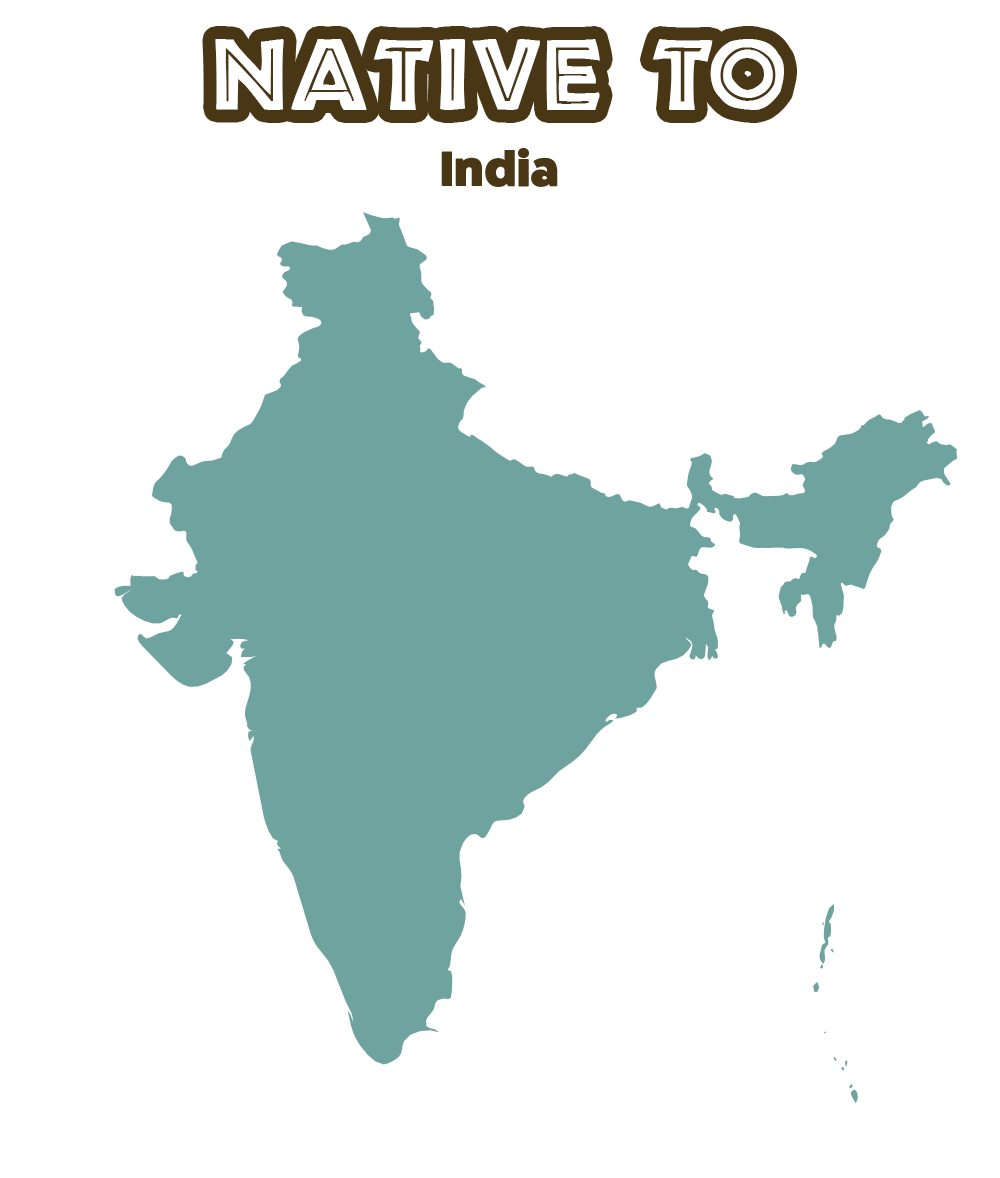
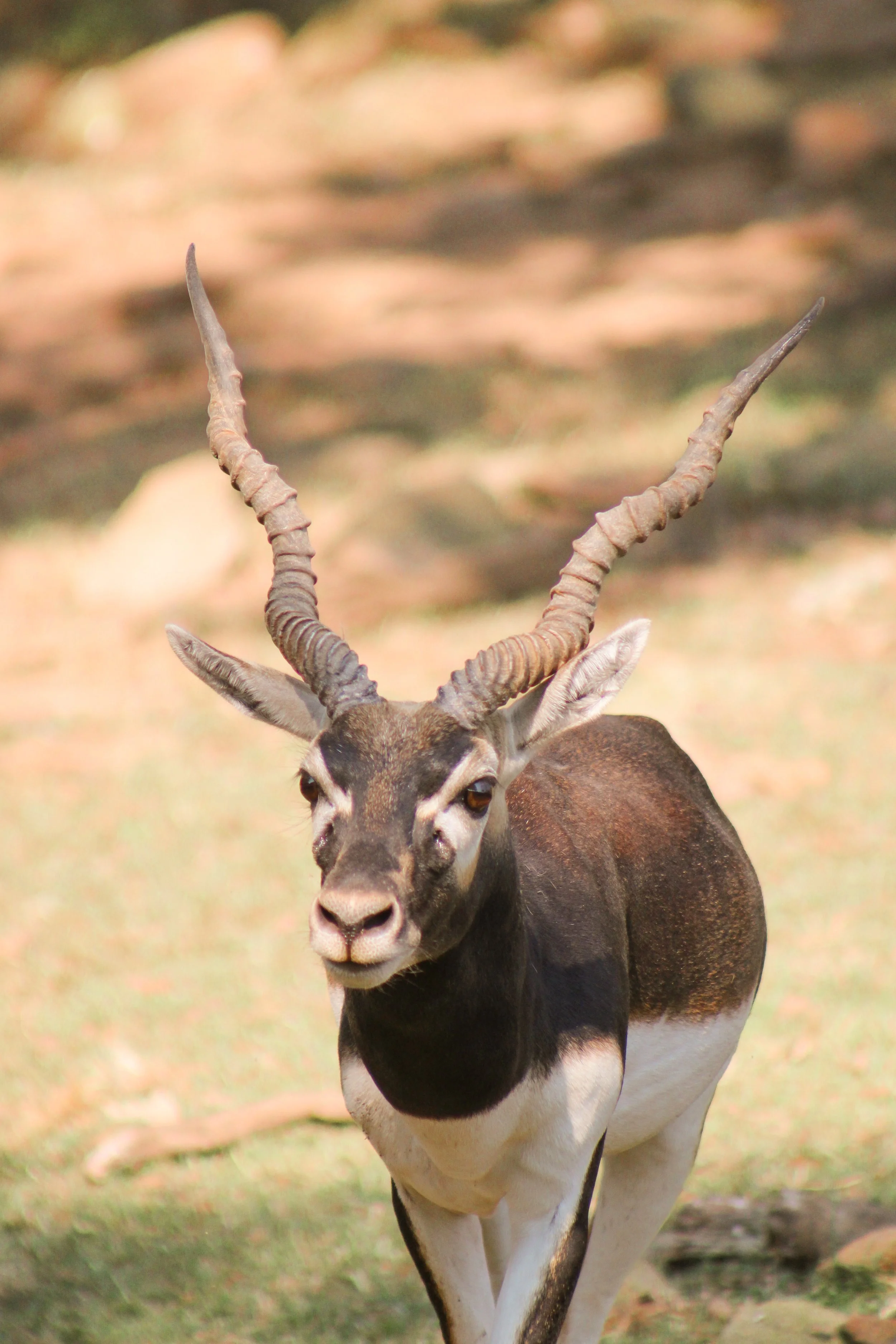
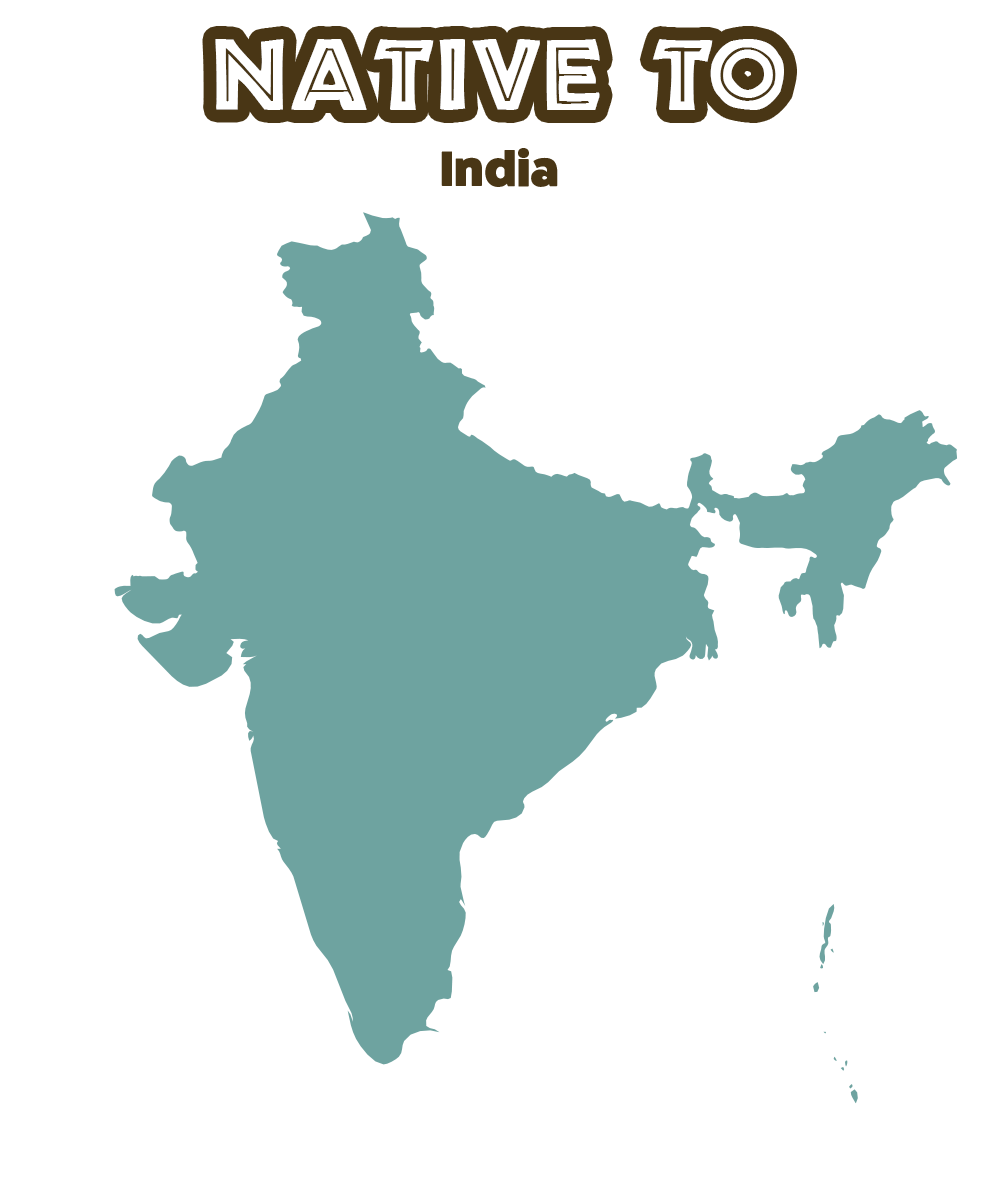
Blackbuck are mainly located in India and eastern Pakistan. They live in grassy plains and thinly forested areas where water sources are located. They also enjoy areas with thorn or dry deciduous forest.
Fun Facts!
Blackbuck have flight distance, a distance that will allow them to notice a predator and run away before the attack. They have different flight distances for different predators. For instance they have a longer distance for a cheetah; while a shorter one for a lion.
BLUE WILDEBEEST
Conservation Status: Least Concern
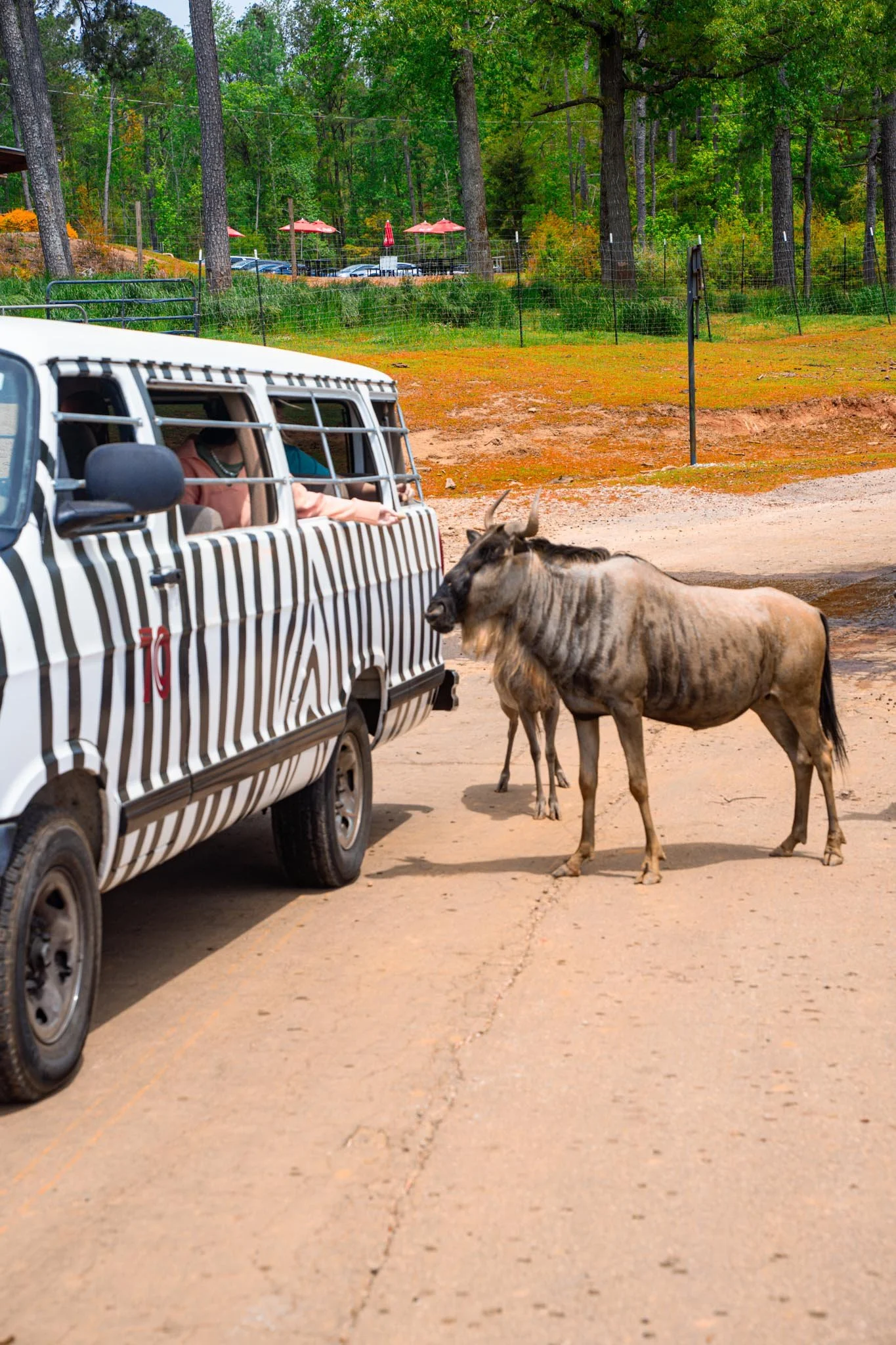
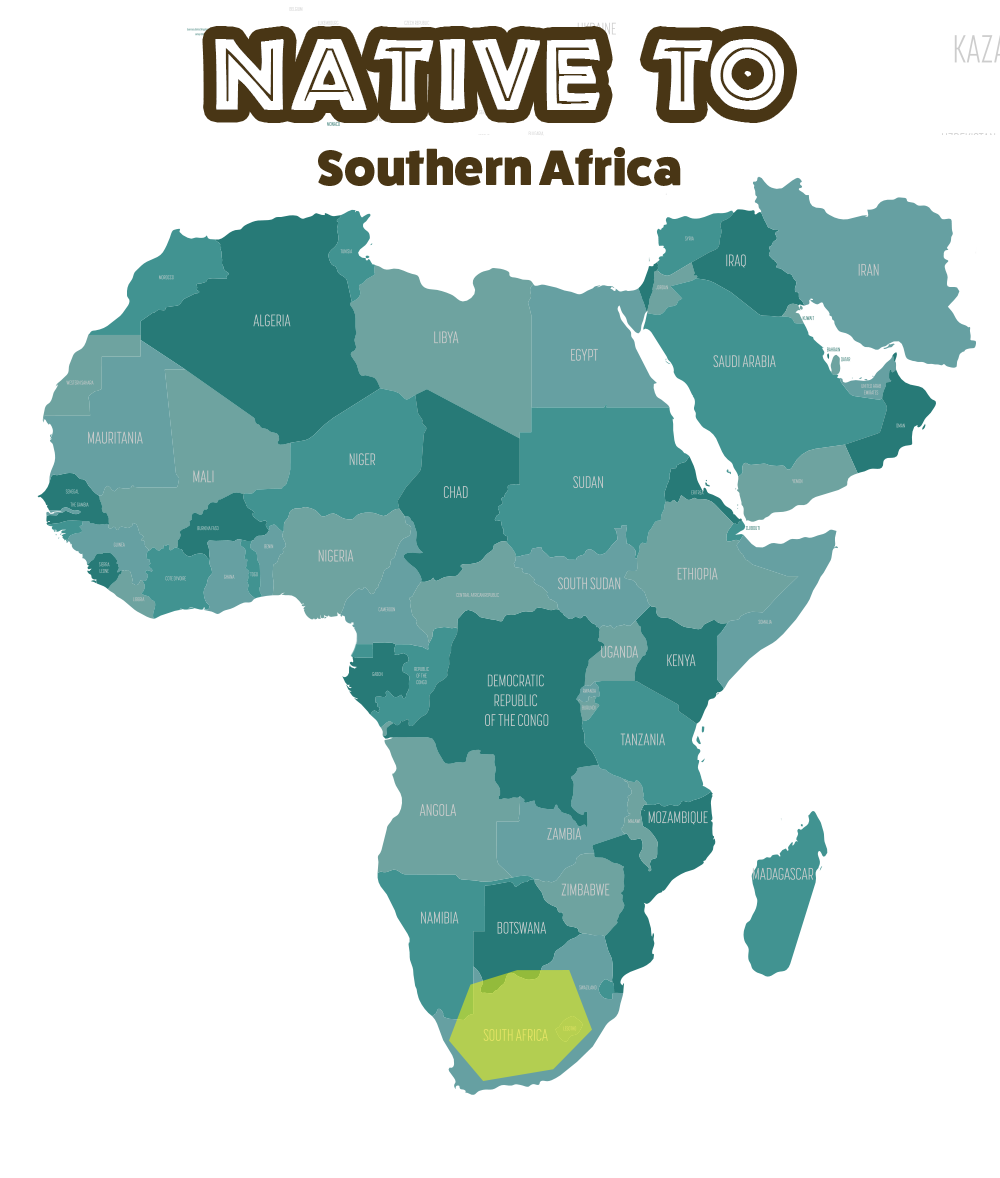
Blue wildebeests’ range occupies eastern and southern Africa. They prefer acacia savannahs and plains with rapidly re-growing grasses and moderate levels of soil moisture. However blue wildebeest may inhabit other areas, such as dense bushes or open woodland floodplains. Wildebeest may have two or three ranges, each corresponding to a particular season. These always include wet and dry ranges, with a third transitional range that not all wildebeest use.
Fun Facts!
Wildebeest are otherwise called 'gnus', which is pronounced 'news'.
Hundreds of thousands of zebras, gazelles, and other animals often join these herds in their migration routes.
Bulls have a wide array of loud vocalizations, from moans to explosive snorts.

CATTLE
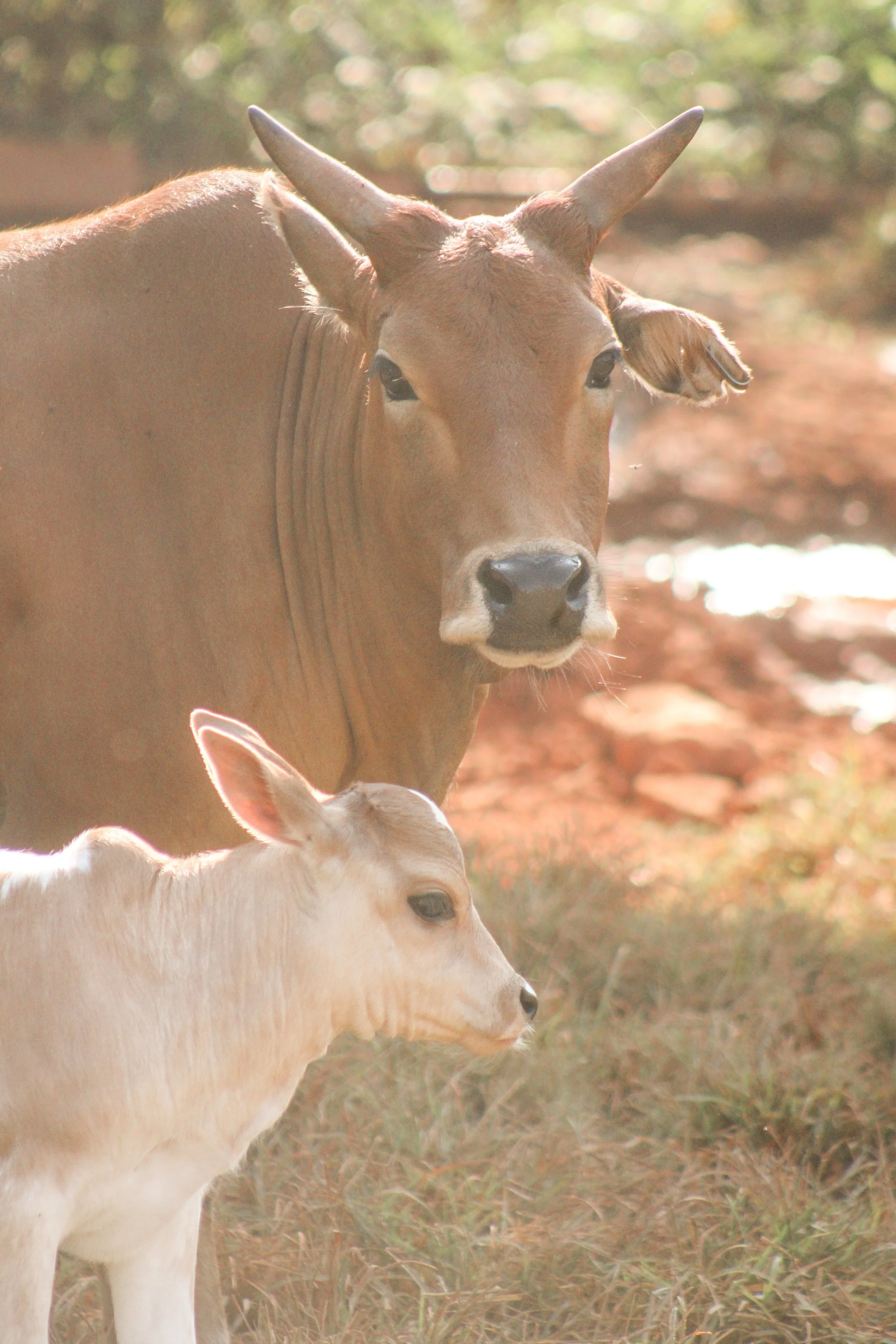
Regional specializations led to the formation of a variety of breeds. The breeds were adapted to different climates, or that were selectively bred to enhance valuable characteristics, such as milk or meat production. Multiple breeds of cows are found at the safari.
Fun Facts!
Cows are worshiped as sacred animals in some religions
Historically, northern Europeans constructed their dwellings alongside or on top of cow stables, creating “housebarns” warmed by the body heat of cows.
The first cow in America arrived in Jamestown in 1611.
Both male and female cows are born with horns, except polled breeds.
More than 100 medicines used by humans come from cattle.
Donkey
Conservation Status: Critical Endangered
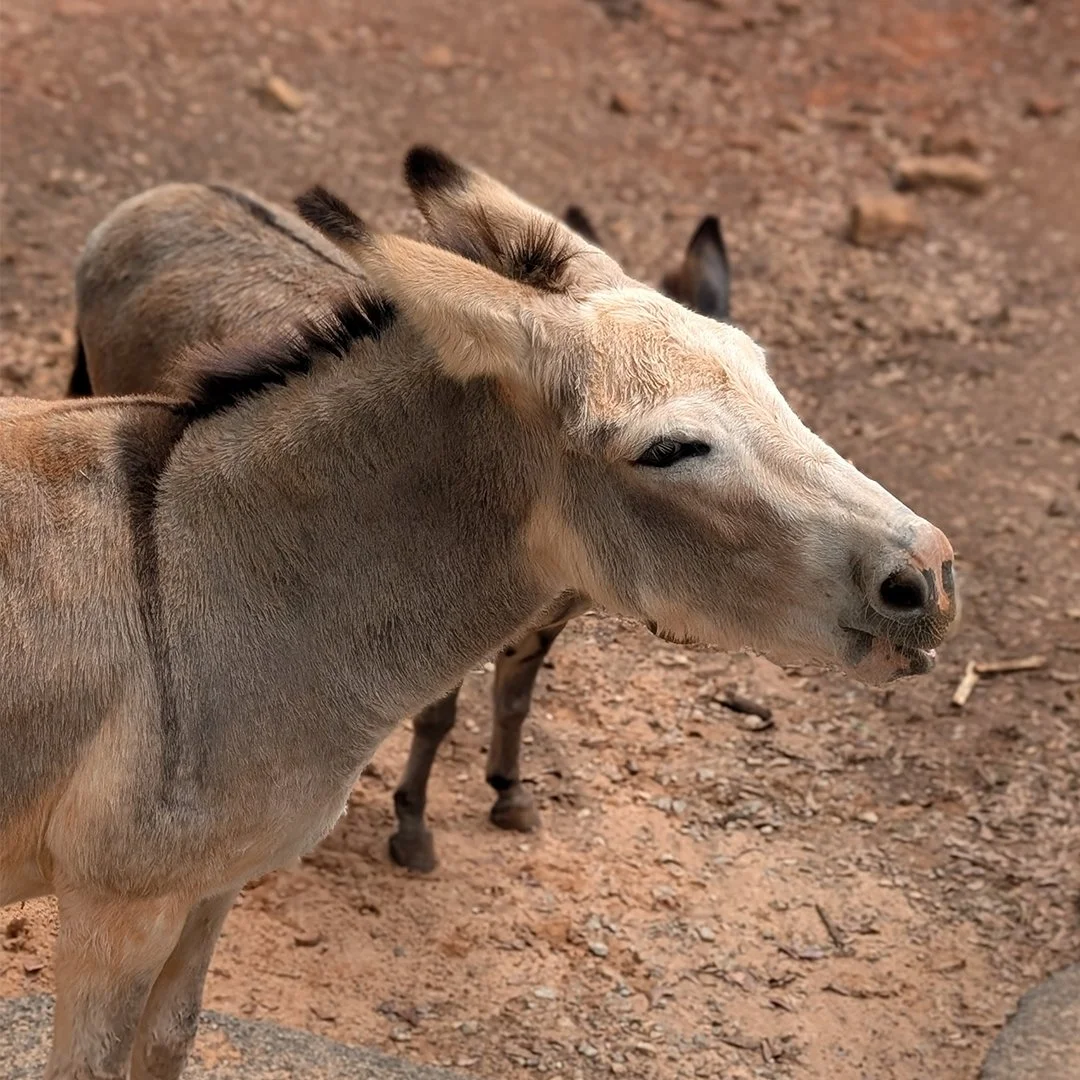
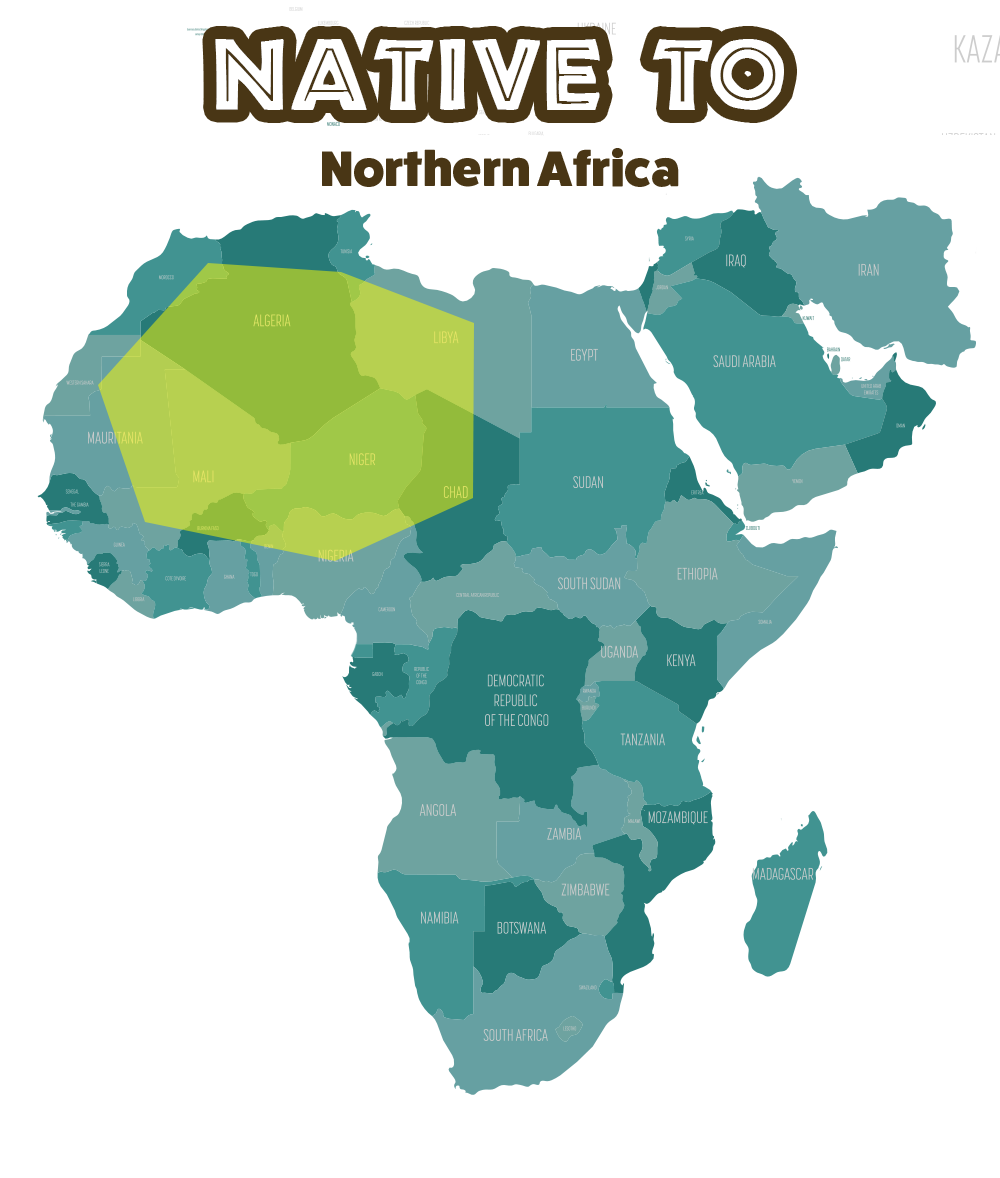
Domesticated donkeys of this species occur around the world. However, true wild donkeys can be found only in northern Africa and the Arabian peninsula. These animals are known to favor warm and dry climatic conditions.
Fun Facts!
Donkeys are known to have a relaxing effect on other animals.
Donkeys occasionally interbreed with other species such as horses or zebras, yielding sterile offspring.
The first donkeys born in the United States belonged to George Washington.
Donkey and burro are interchangeable, the term burro is widely used in the southwestern United States to describe small donkeys.
Domestic donkeys and wild donkeys communicate in the same way. They both use many different forms of communication. They use their body, sound, and smell to convey feeling.
Donkeys are also sometimes trained to protect other domestic livestock such as sheep and goats
Dromedary CAMEL
Conservation Status: N/A
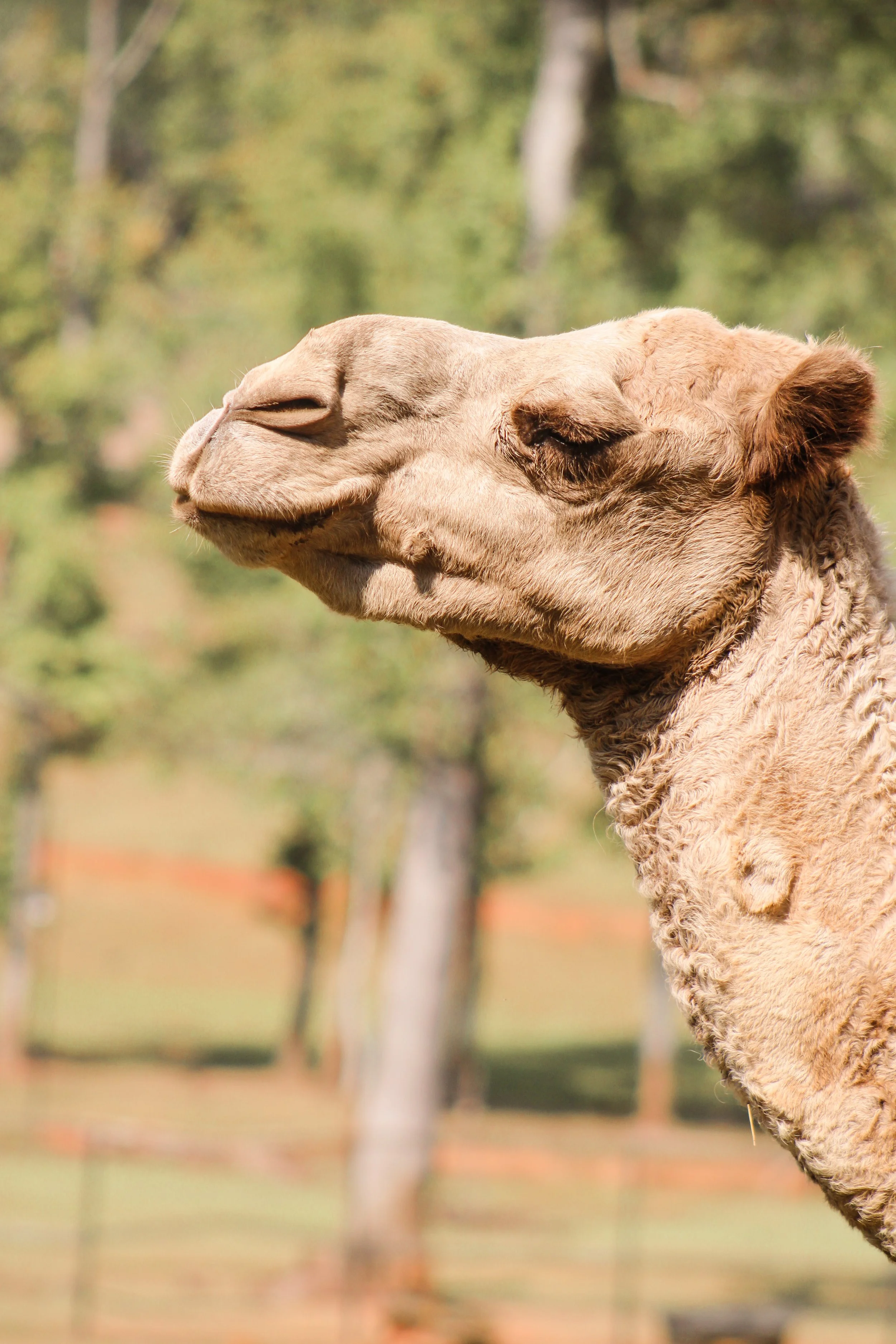
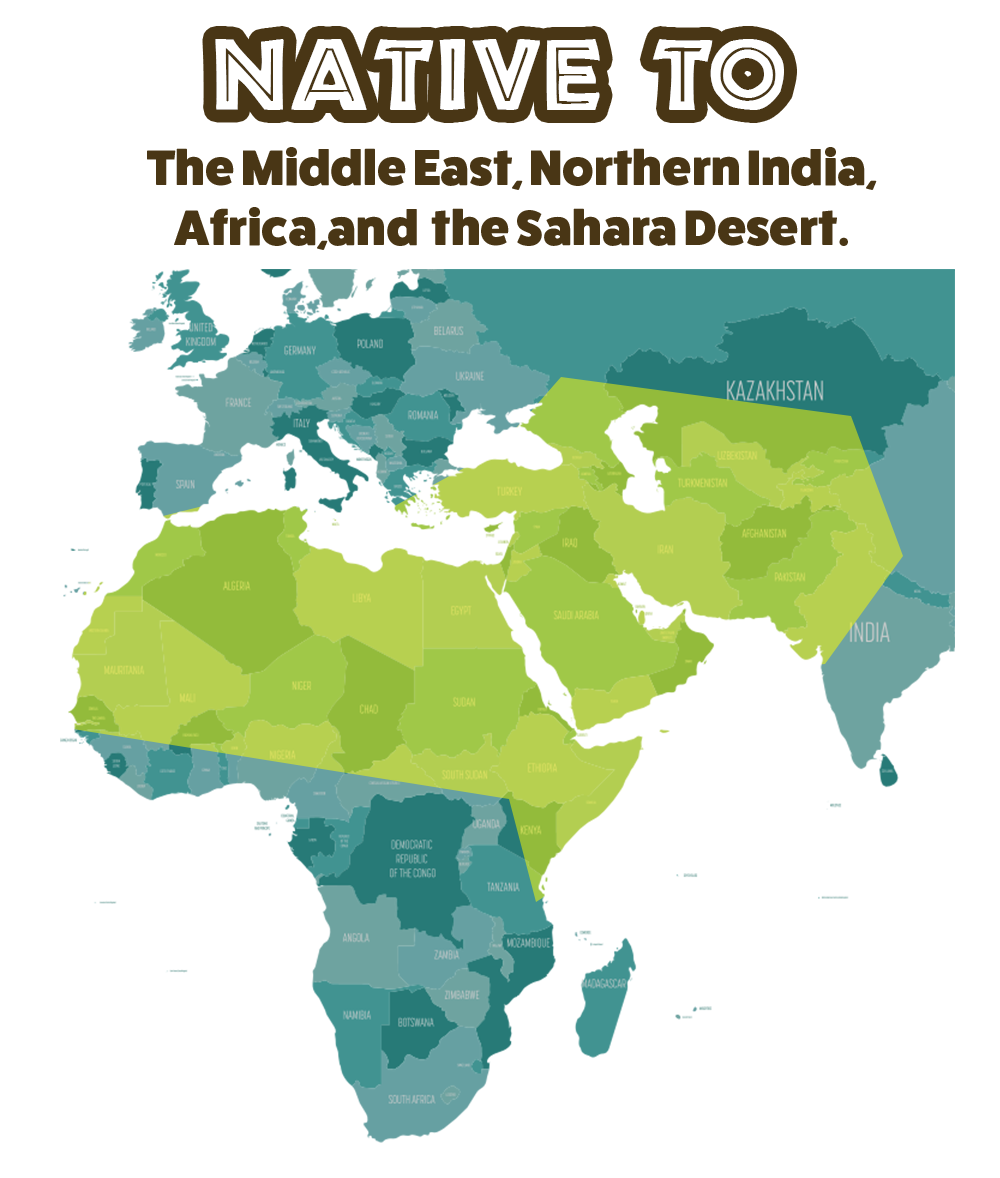
About 90% of the world’s camels are dromedary camels. The dromedary has not occurred naturally in the wild for almost 2,000 years. They are generally found in arid regions in the Middle East, northern India, and Africa. There is also a significant feral population of dromedary camels in Australia. Dromedary camels prefer desert conditions characterized by a long dry season and a short rainy season. Keeping Dromedaries in other climates is difficult, because they are sensitive to cold and humidity.
There are no true wild dromedaries anymore. Dromedaries were first domesticated about 4000 years ago, most likely in Somalia or the Arabian Peninsula. The number of domestic dromedaries is about 15 million. As of 2013, the feral population of Australia was estimated at around 300,000 individuals.
Fun Facts!
Camels can spread their two toes on each of their feet to stop them from sinking into the sand.
Camels have two layers of long eyelashes. The eyelashes protect their eyes from sand.
Camels only sweat when temperatures reach 106°F or higher.
A camel's noise was used as the voice of Chewbacca in the Star Wars movies.
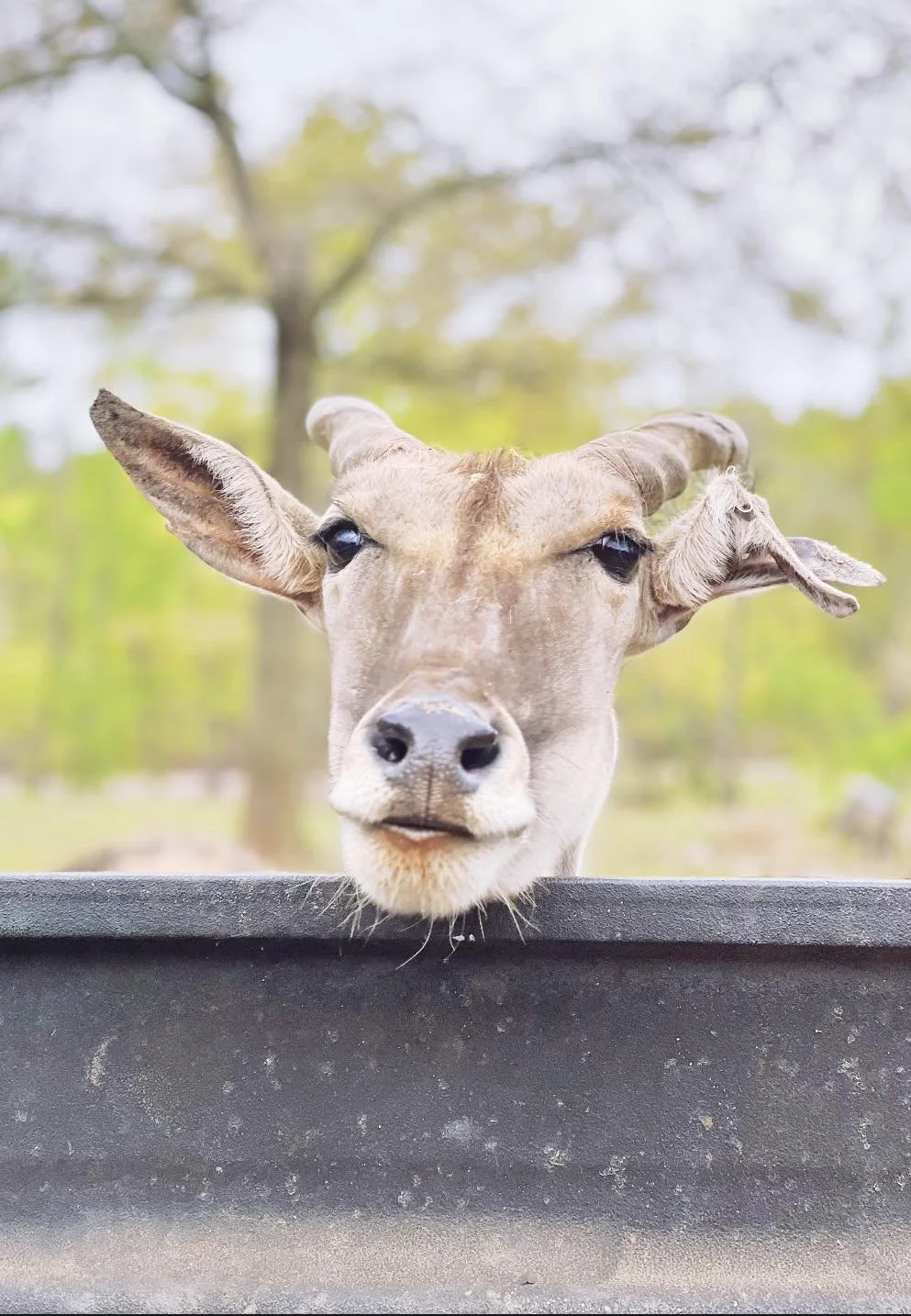
Eland
Conservation Status: Least Concern
Elands are usually fawn or tawny-colored, they turn gray or bluish-gray as they get older; the oldest animals become almost black. The Common eland inhabit southern Africa. They prefer to live in semi-arid areas that contain many shrub-like bushes. They also may inhabit woodlands, bush, mountaintops, and grasslands with good herb cover.
Fun Facts!
If a predator is seen, the bull of a group will bark and start walking back and forth to warn other elands of danger.
The eland is the second largest of all antelopes. The giant eland is the first.
Elands are the slowest antelopes in the world.
Elands have the endurance to maintain a trot seemingly indefinitely and can jump a 4 feet fence from a standstill.
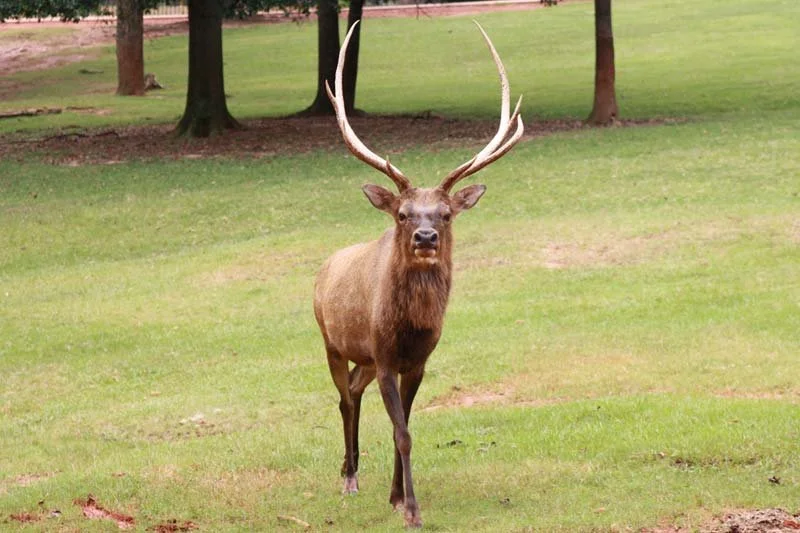

ELK
Conservation Status: Least Concern
Elk are classic red deer in their biology. They are more highly adapted to life in open plains, to grazing, and to cold long winters. Elk are found in North America and eastern Asia. They mainly live in forest, on the forest edge, and in alpine meadows. Elk found in mountainous areas usually live at high elevations in summer and migrate down the slope by winter. However, Elk are very adaptable. Because of this, they can also be found in semi-deserts of North America.
Fun Facts!
Elk are excellent swimmers.
Their antlers are made of bone, sometimes growing at a rate of as much as 1 inch per day.
The elk can cool off due to its blood, pumping through the veins in its antler velvet and thus cooling, before it returns to the heart.
Canine teeth, also known as ivories, of elk are considered by scientists to be rudimentary tusks.
Elk are also called wapiti, a Native American word that means “light-colored deer.”
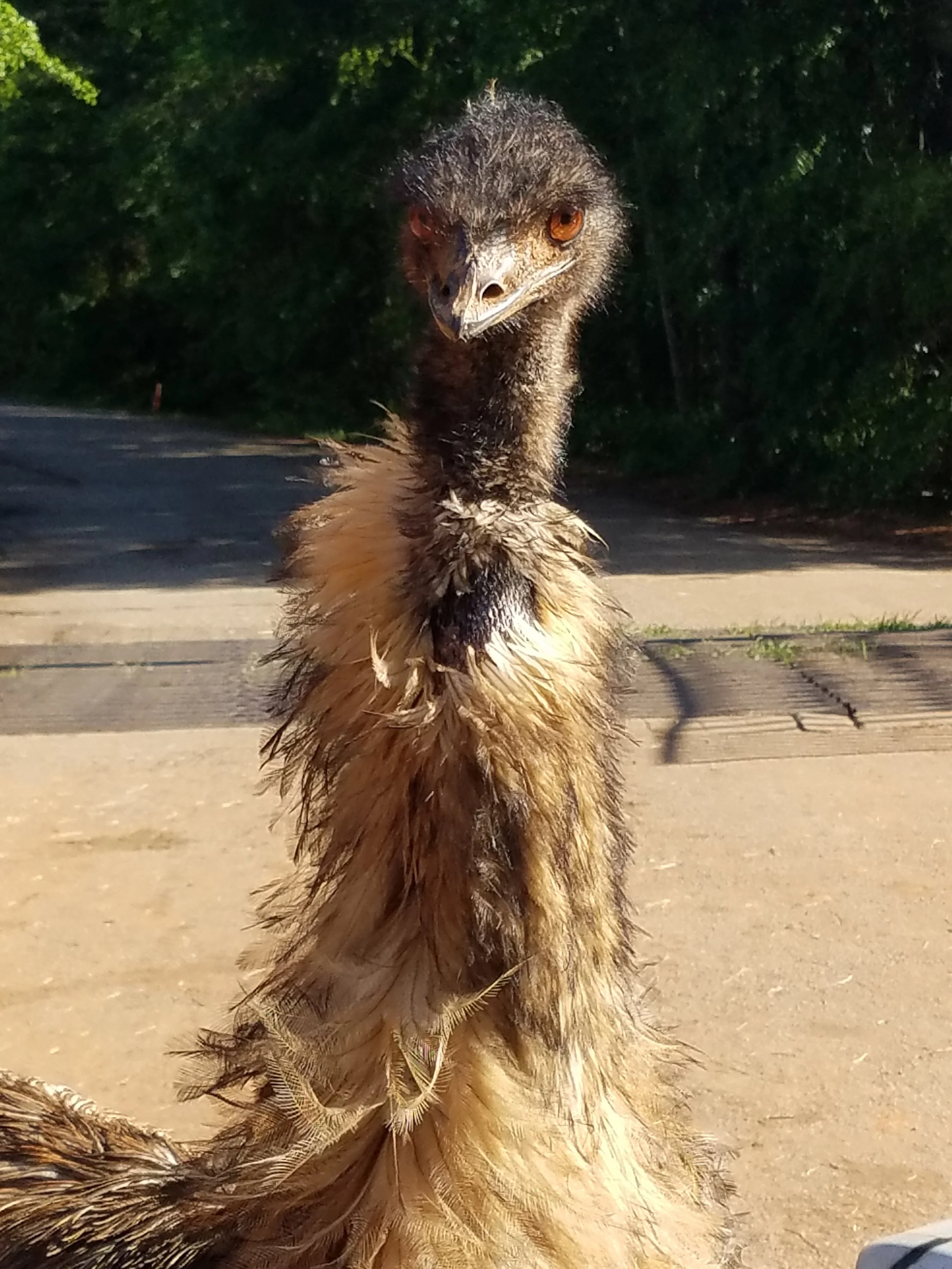

EMU
Conservation Status: Least Concern
Australia is the only place emus are found and they inhabit almost the entire continent. The emu's range covers most of mainland Australia. Historically they also lived on King and Kangaroo Islands, and on Tasmania, but on all three islands the species is now extinct. Emus inhabit a range of habitats including grassland, dry forest, wooded savannah, and semi-desert, but not the tropical forests in northeastern Australia.
Fun Facts!
An emu has two pairs of eyelids: one is for blinking and the other is to keep dust out.
Emu males make a sound like a pig’s grunt and the females make loud booming sounds.
The emu is the second largest living bird
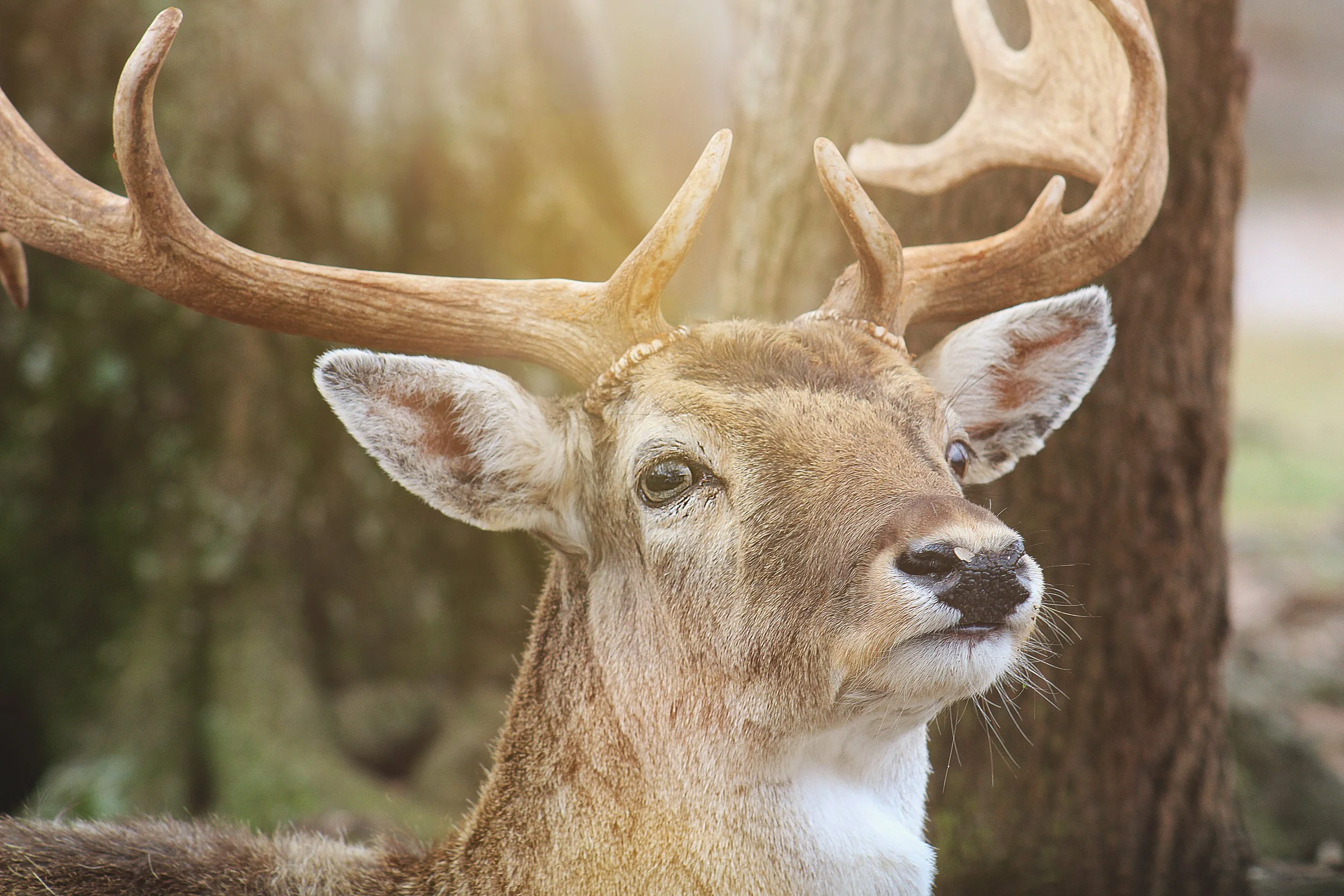

FALLOW DEER
Conservation Status: Least Concern
Fallow deer are originally a Eurasian deer species. They are found widely distributed over Europe and a vast part of western Asia. In addition, there are introduced fallow deer populations in South America, the United States, South Africa, New Zealand and Australia. They live in a range of climates.
Fun Facts!
The antlers of males can measure as much as 27 in long.
Fallow deer have been an important part of human history. From paleolithic times nearly 500,000 years ago through today, fallow deer have been hunted for food and sport.
Fallow deer are the sole survivors of the Megacerines, a diverse deer lineage that was widespread and abundant early in the Ice Ages.
GAUR
Conservation Status: Vulnerable & decreasing
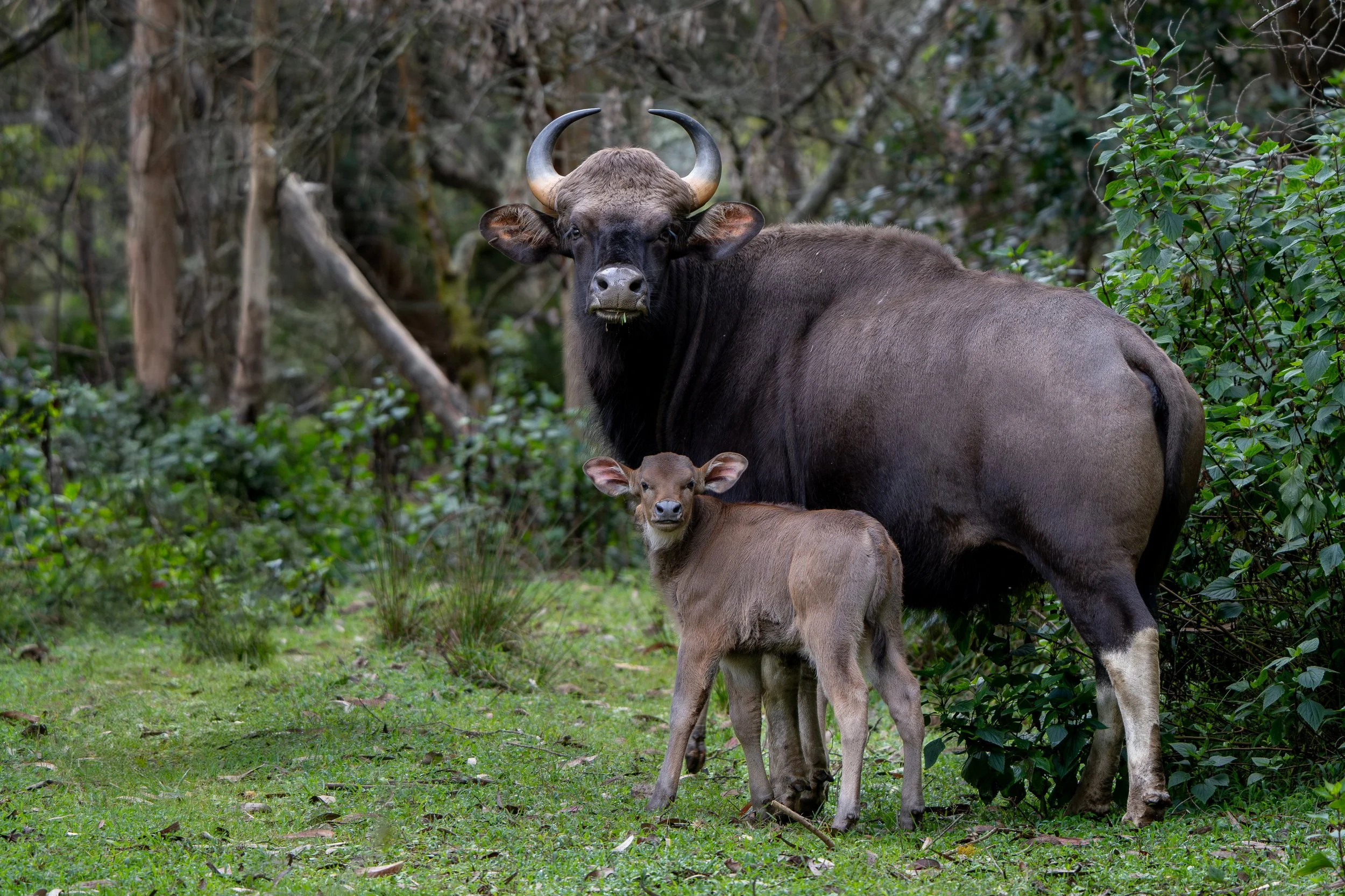
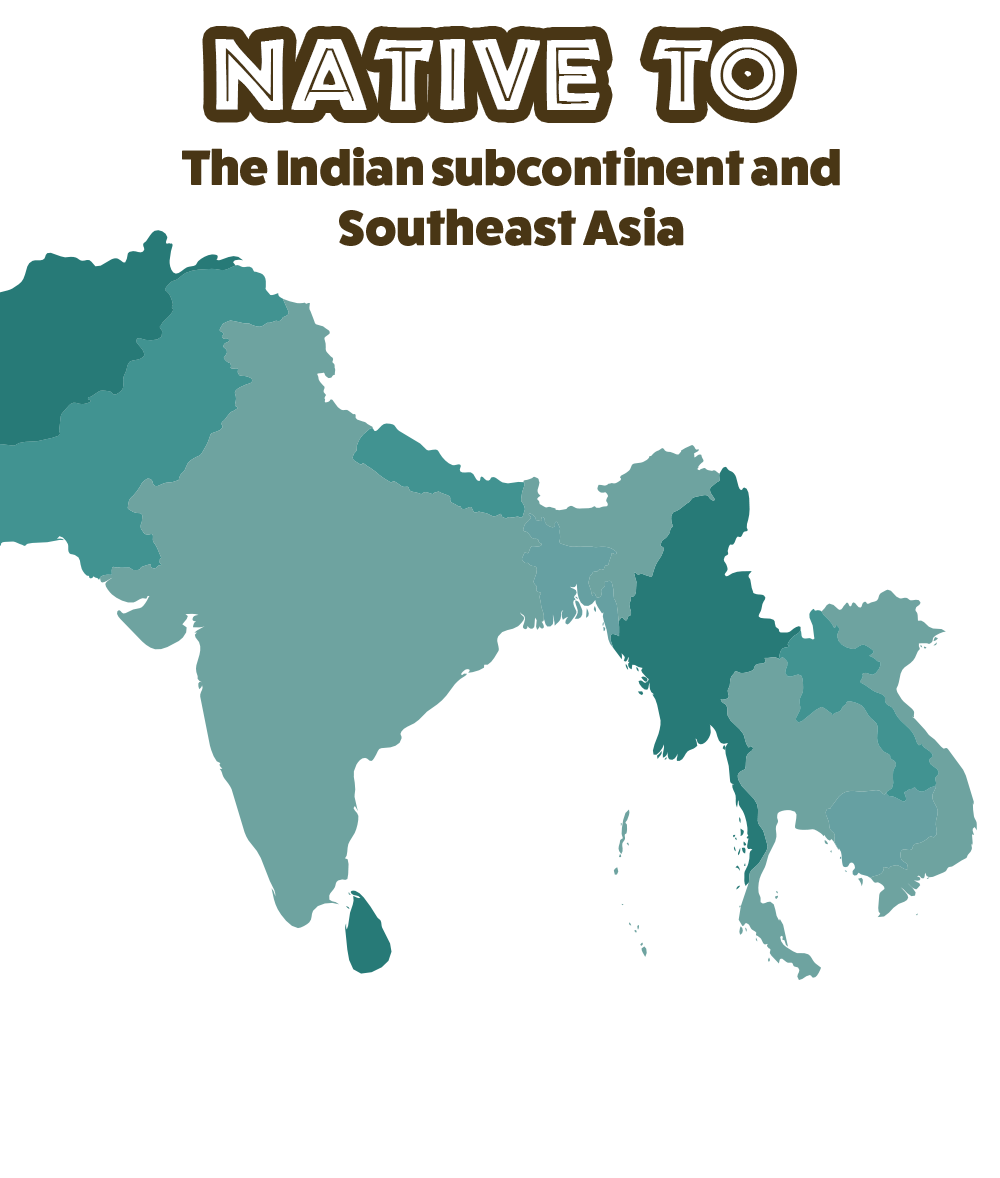
Gaurs are found throughout mainland South and Southeast Asia. These animals don’t migrate and live in evergreen forests or semi-evergreen and moist deciduous forests. They can also occur in deciduous forest areas at the periphery of their range. Gaur prefer large, relatively undisturbed forest tracts, hilly terrain, availability of water, and an abundance of forage in the form of grasses, bamboo, shrubs, and trees.
Fun Facts!
When alarmed, gaurs give out a call known as "whistling snort".
Adult males are about 25% larger and heavier than females.
When a gaur bull bellows, it can be heard as far as 1 mile away.
There are three recognized subspecies of Gaur; Bos gaurus gaurus, Bos gaurus hubbacki, and Bos gaurus laosiensis.
GIRAFFE
Conservation Status: Vulnerable & decreasing
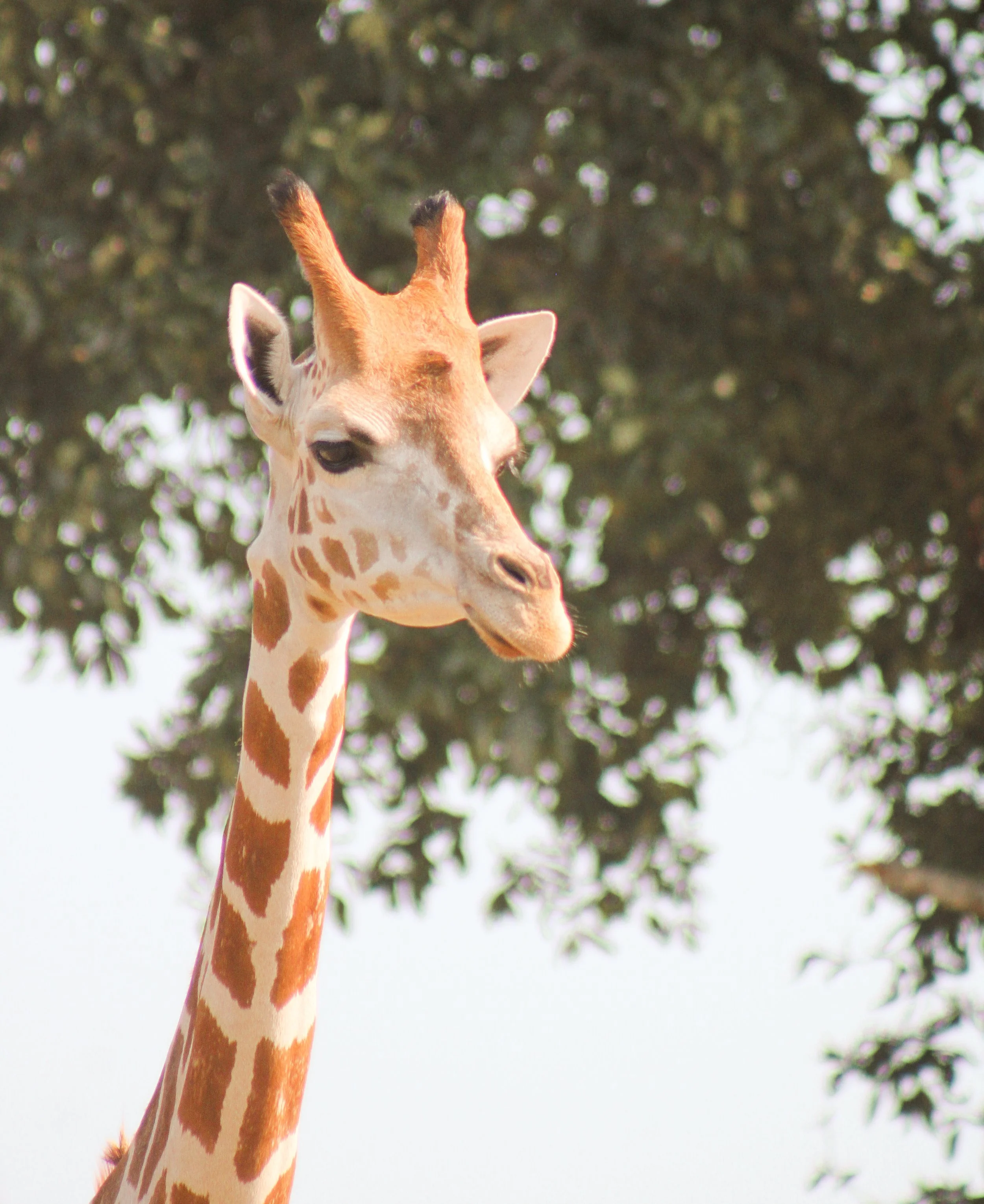
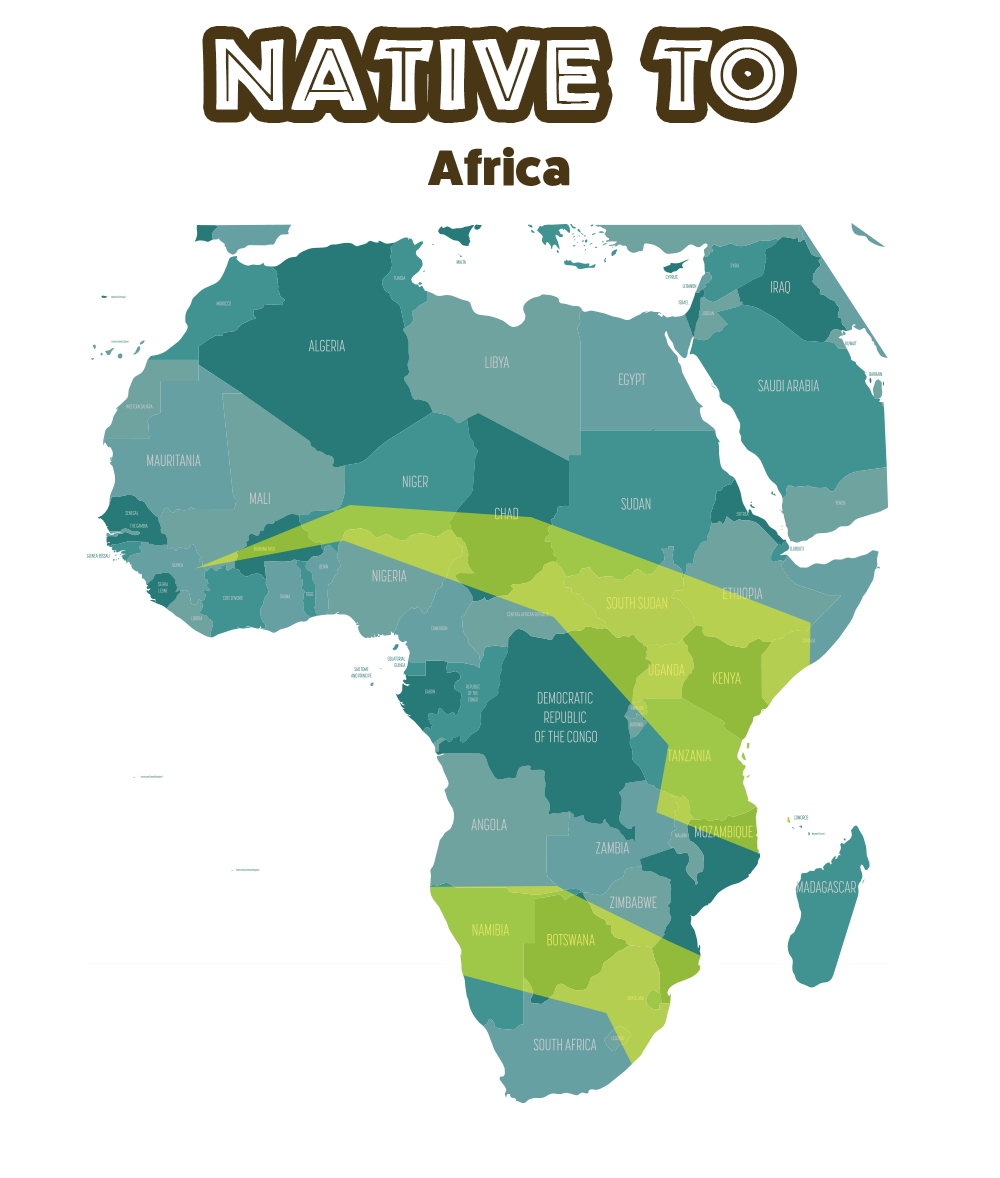
Giraffes are any of four species in the genus Giraffa and are native to Africa, The areas they inhabit are very fragmented. Giraffes are frequently found in areas with Acacia trees. The most suitable habitat for these animals is a dry, arid land. They inhabit grasslands, savannas, and open woodlands.
Fun Facts!
Giraffes sleep from 10 minutes to 2 hours a day, which is one of the shortest sleeping requirements among mammals.
The heart of a giraffe is about 2 ft long and weighs up to 22 lbs. To keep blood flow to the brain, the heart of a giraffe has to generate twice as much blood pressure versus an average large mammal.
LLama
Conservation Status: N/A
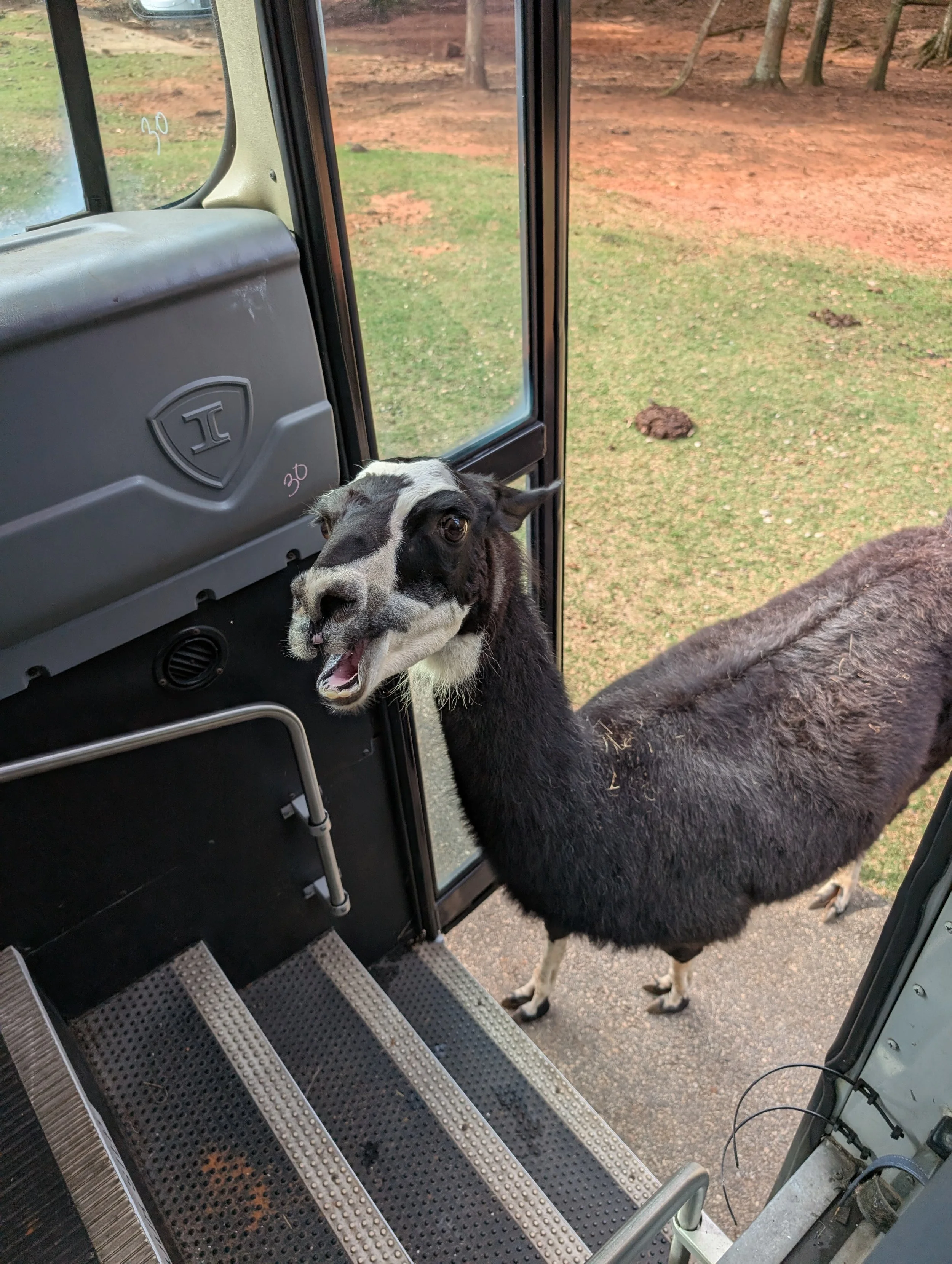
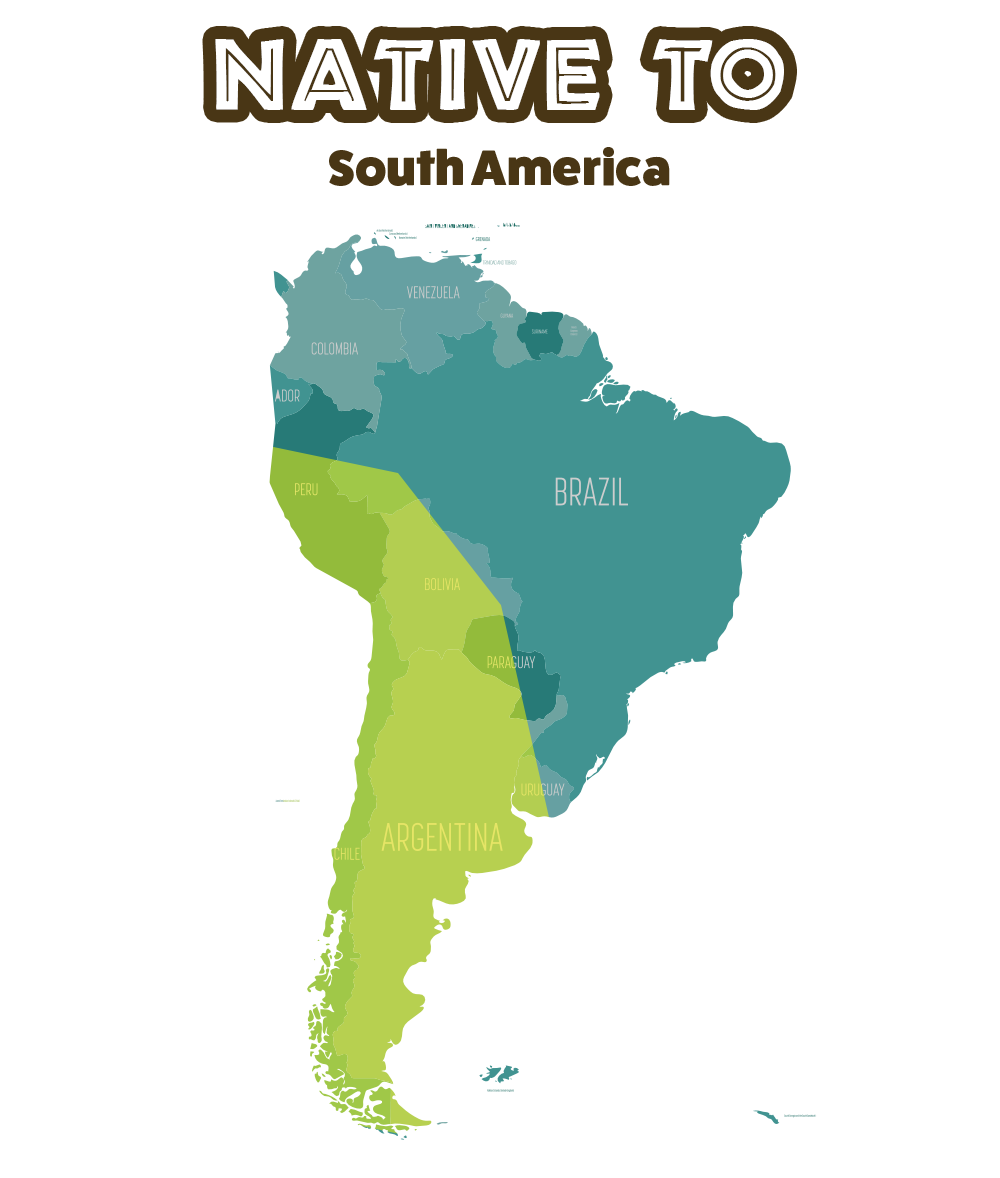
Llamas are originally native to the Andean mountains of South America. Llamas appear to have been bred from guanacos and used as beasts of burden starting about 6,500 years ago. However, they are extinct in the wild and exist today only as domesticated animals. They were introduced as pets and farm animals to North America, Europe, and Australia.
There are nearly 3 million llamas worldwide with nearly 70% of the population located in Bolivia. The current population of llamas in South America is estimated to be over 7 million. There are around 158,000 llamas in Canada and the U.S.
Fun Facts!
Domestication of the llama began about 3,000 to 5,000 years ago, making them one of the first animals in the world to be domesticated.
They are used in hospices, nursing homes, and hospitals to give residents some positive interaction.
Fossil footprints in California show the ancestor of the llama came originally from North America. Scientists believe that the animals that went north across the Bering land bridge later evolved into camels. Those that migrated south evolved into the "llama" family, known as lamoids.
Llamas have an unusually high content of hemoglobin in their bloodstream and oval shaped red blood corpuscles. These are adaptations for surviving in an oxygen-poor, high altitude environment.
Nilgai
Conservation Status: Least Concern
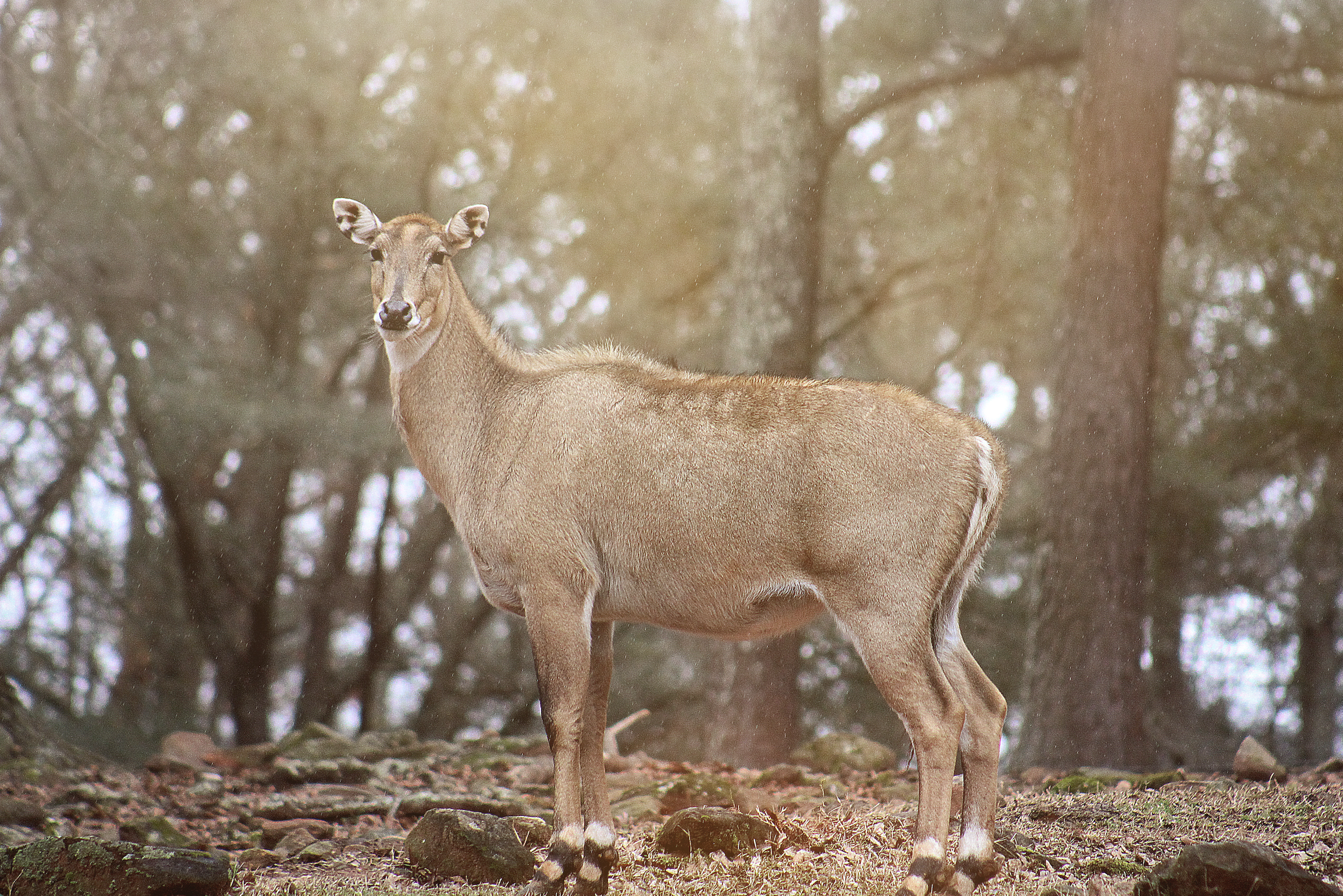
Nilgai are native to the Indian subcontinent. They prefer areas with short bushes and scattered trees in scrub forests and grassy plains. They are common in agricultural lands, and hardly occur in dense woods. They are sedentary and less dependent on water, however they may desert their territories if all water sources around their territory dry up.
Fun Facts!
The nilgai is the largest Asian antelope.
Nilgai mark their territories by forming dung piles as much as 20 inches in radius.
The name "nilgai" comes from the fusion of the Hindi words nil, meaning blue, and gai, meaning cow
Hindus consider it the same sacred status as cattle.
Ostrich
Conservation Status: Least Concern
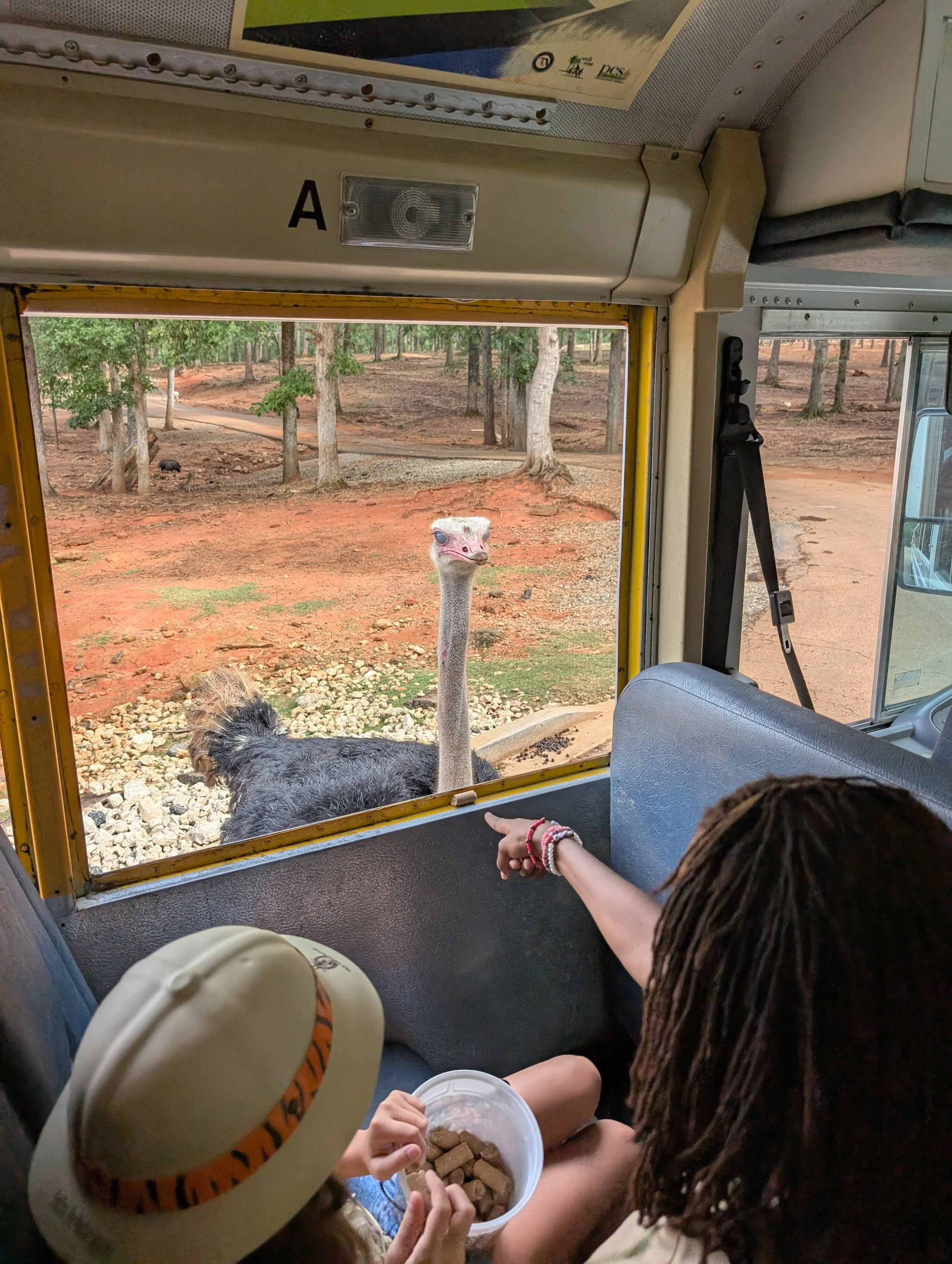
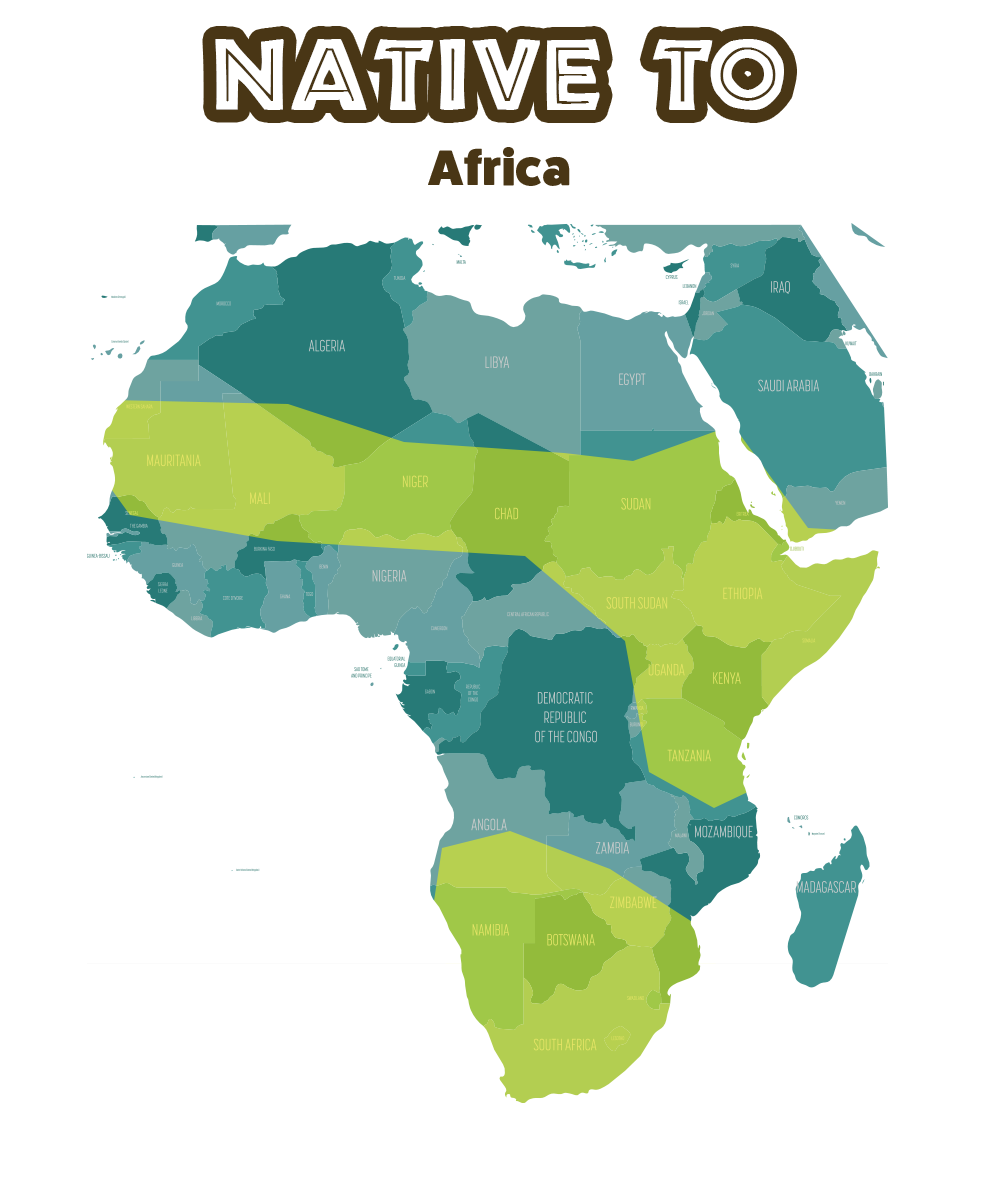
The ostrich, also known as the common ostrich, is a flightless bird native Africa and is the largest living bird species. Up until the mid 20th century, ostriches occurred naturally in southwestern Asia, the Arabian peninsula, and Africa. They have since been hunted to extinction except in sub-Saharan Africa. Ostriches live in the wild in western and eastern Africa, as well as South Africa. Ostriches farmed in Australia, New Mexico, and Israel have established feral populations. These birds inhabit open land. Their biomes include: semi-desert, true desert, dry grasslands, scrubby areas, and pasturelands.
Fun Facts!
Ostriches have prehistoric-looking feet, and are the only birds with only two toes on each foot. The inner one is thick and strong, and is adapted for running. They have a large claw which may be used in defense.
One ostrich egg weighs around 24 chicken eggs.
Ostriches have the largest eyes of any living land animal.
There are five recognized subspecies of Ostrich, but only four are still around today.

PIGS
Conservation Status: N/A
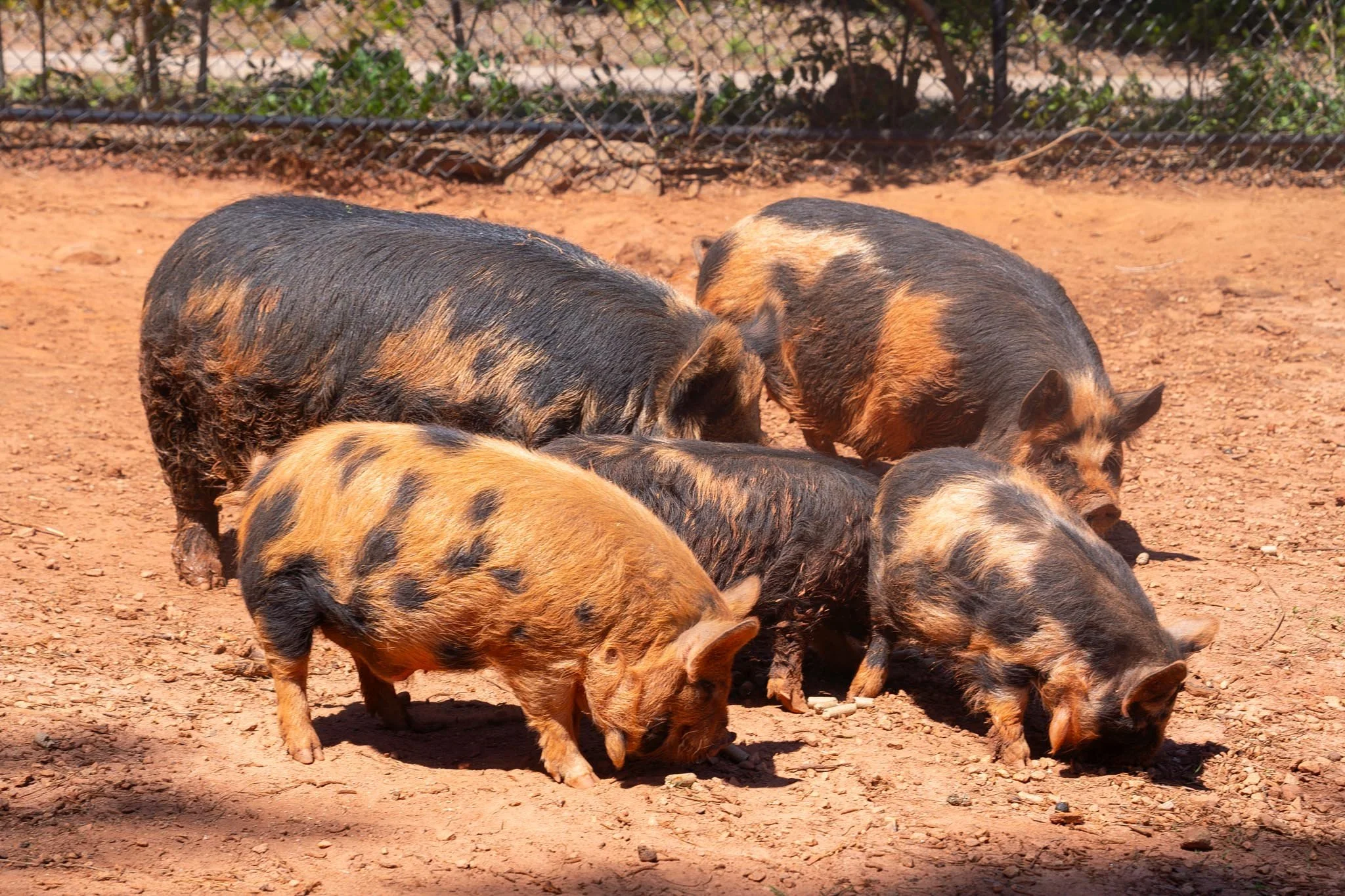
Pigs are members of the Suidae family, which includes eight genera and 16 species. Among those species are wild boars, warthogs, pygmy hogs and domestic pigs. There is little difference between wild pigs and domestic swine. The wild boar is currently the only domesticated species of pig. Wild pigs typically live in grasslands, wetlands, rain forests, savannas, scrublands and temperate forests.
Fun Facts!
Pigs are highly intelligent and easily trainable animals. They are the fourth most intelligent animals in the world, falling behind chimpanzees, dolphins and elephants.
Hippopotamus are distant relatives of pigs.
The largest pig in history was a swine called Big Bill, who stood at 5 feet tall and weighed 2,552 lbs.
PlainS ZEBRA
Conservation Status: Least Concern
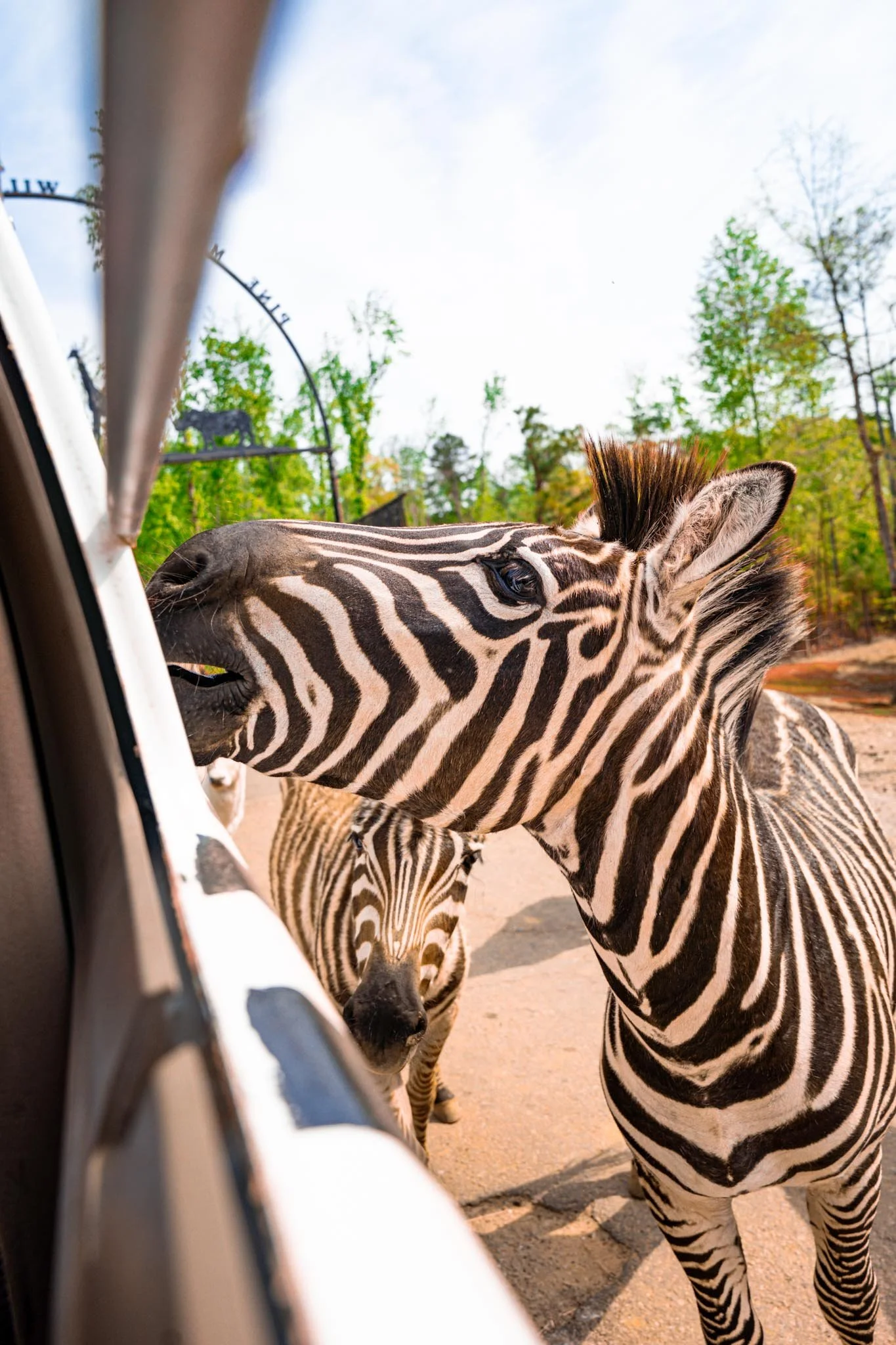
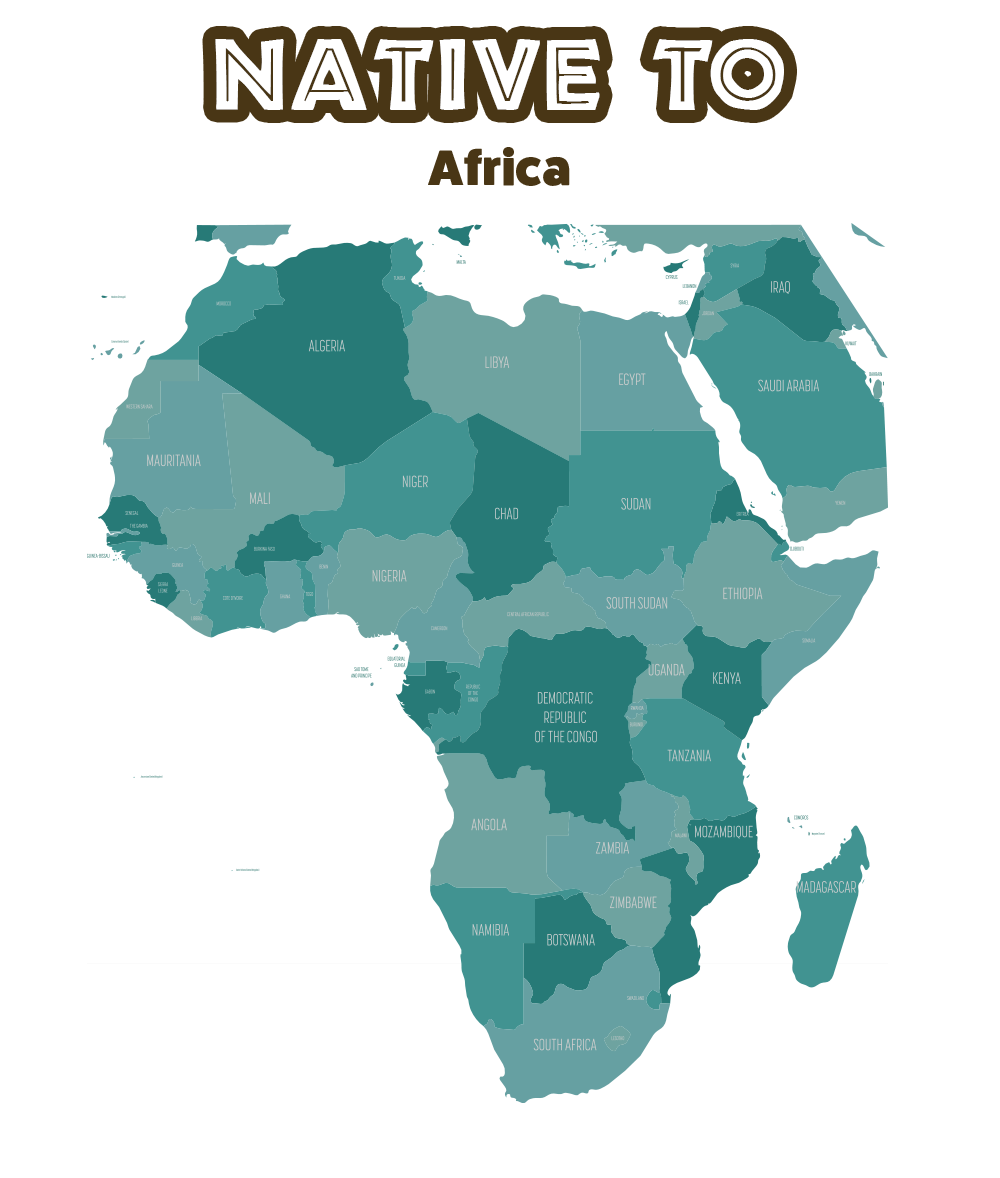
The Plains zebras are native to Africa. There are 6 sub-species, whose territories overlap. The natural range of these animals covers the south-eastern part of the continent. The plains zebra is also known as the common zebra. They are the most common and geographically widespread species of zebra. Their range is fragmented, but spans much of southern and eastern Africa south of the Sahara.They prefer open terrains such as savannas, grasslands, open woodlands as well as scrublands. They are found less frequently in taller grasslands, denser woodlands, hills, and mountainous areas. They appear to avoid dense forests, deserts and wetland areas.
Fun Facts!
Each species of zebra has a different general pattern of stripes.
Each species of zebra has its own conservation status. While the plains zebra is not endangered, the mountain zebra is considered vulnerable and the Grevy's zebra is endangered.
Zebras exhibit no sexual dimorphism except for males having spade-shaped canines used in fighting.
Many scientists think that the zebra’s stripes evolved to prevent fly infestations
SCIMITAR-HORNED ORYX
Conservation Status: Endangered
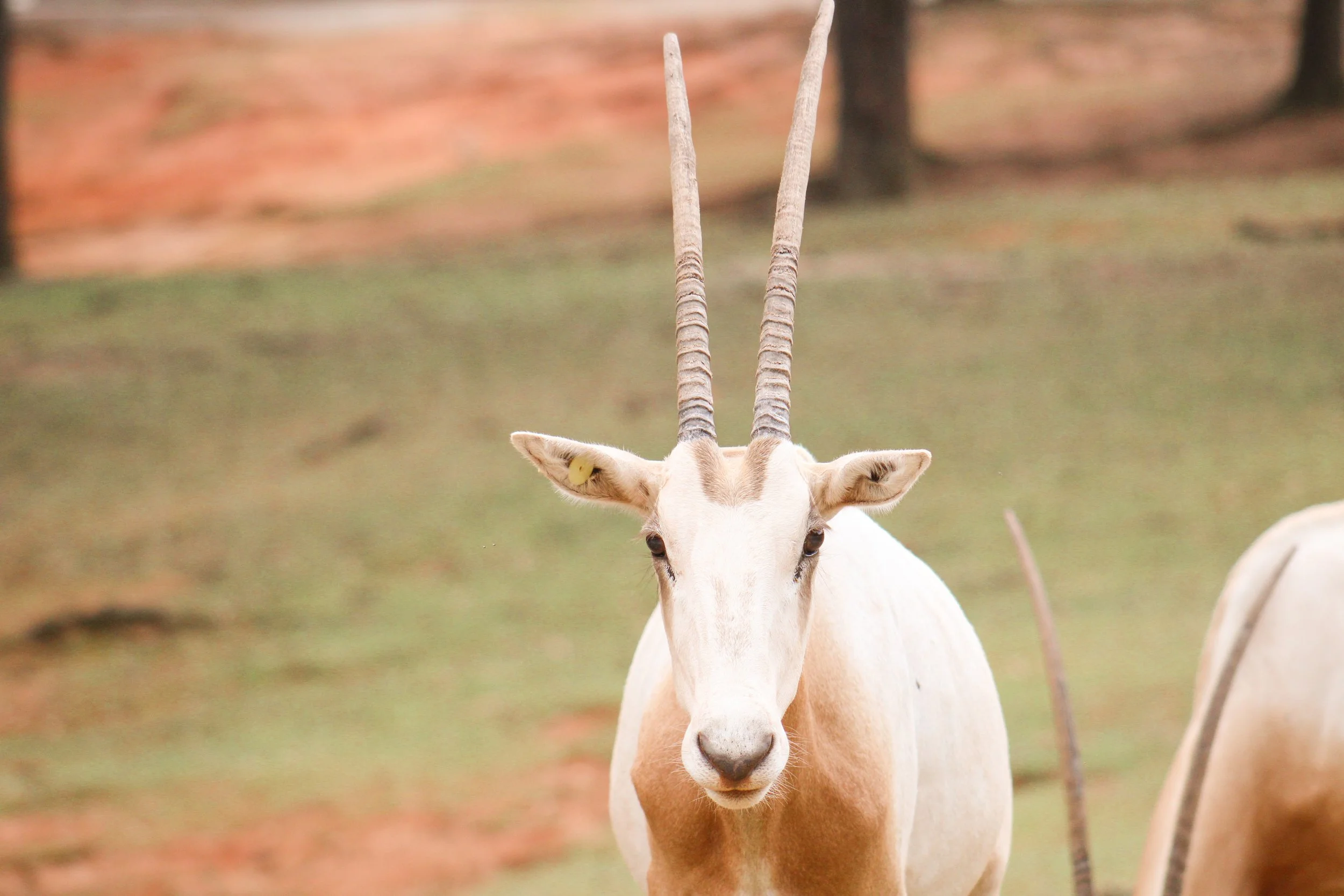
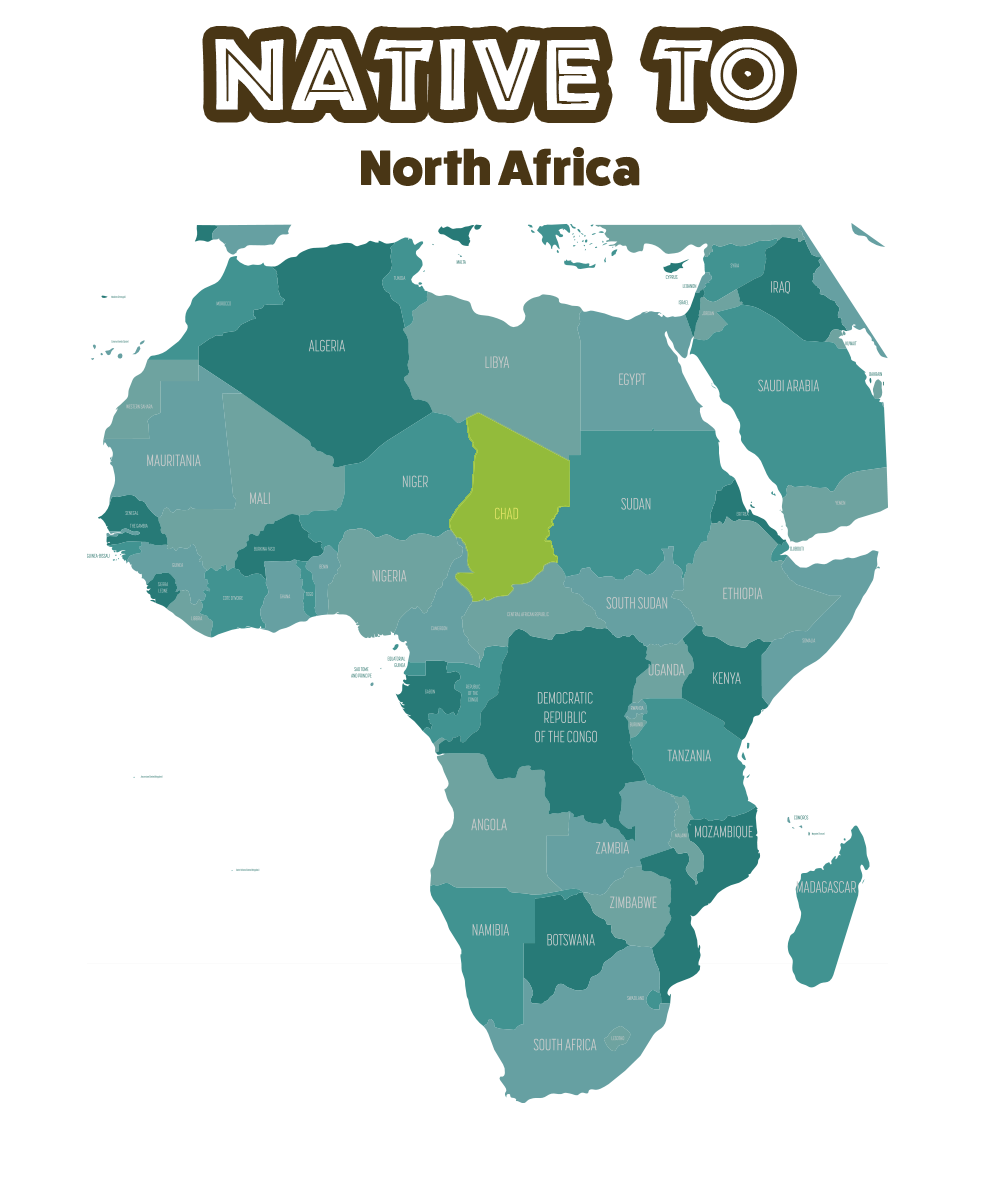
Once declared extinct in the wild in 2000, scimitar-horned oryx were successfully reintroduced into Chad in 2023 thanks to captive breeding programs in zoos and wildlife reserves.
Fun Facts!
Their light-colored coat reflects the sun’s rays, while dark markings on the face and the tip of the tongue help protect against sunburn.
Their long, curved horns can reach lengths of approximately 4 to 5 feet.
Scimitar-horned oryx are highly adapted to desert life and can survive without drinking water for 9 to 10 months, as their kidneys efficiently conserve water.
The legend of the one-horned unicorn may have been inspired by sightings of injured scimitar-horned oryx. Their horns are made of hollow bone and cannot regrow; if an oryx loses a horn, it will live the rest of its life with only one.
Water Buffalo
Conservation Status: Endangered
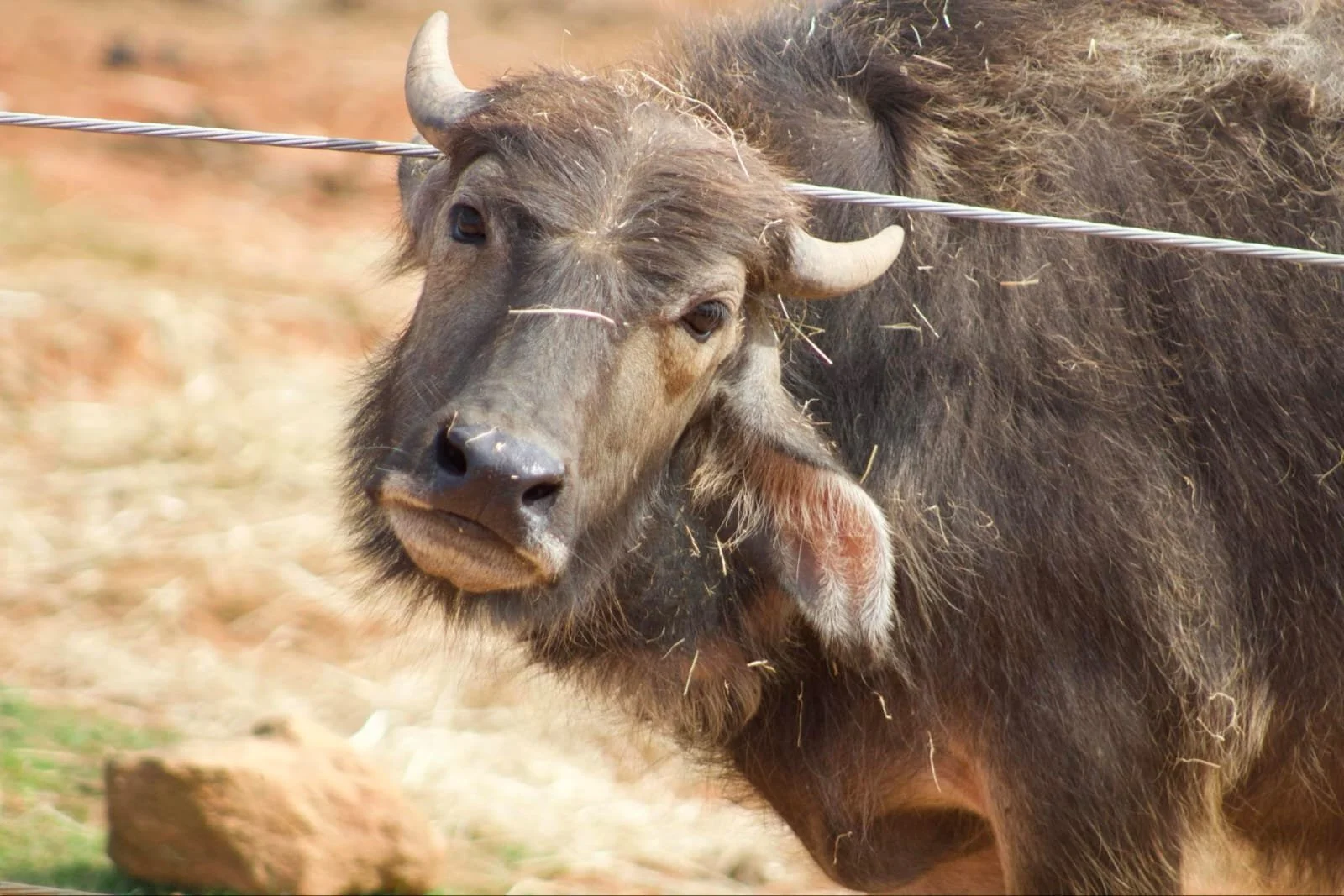
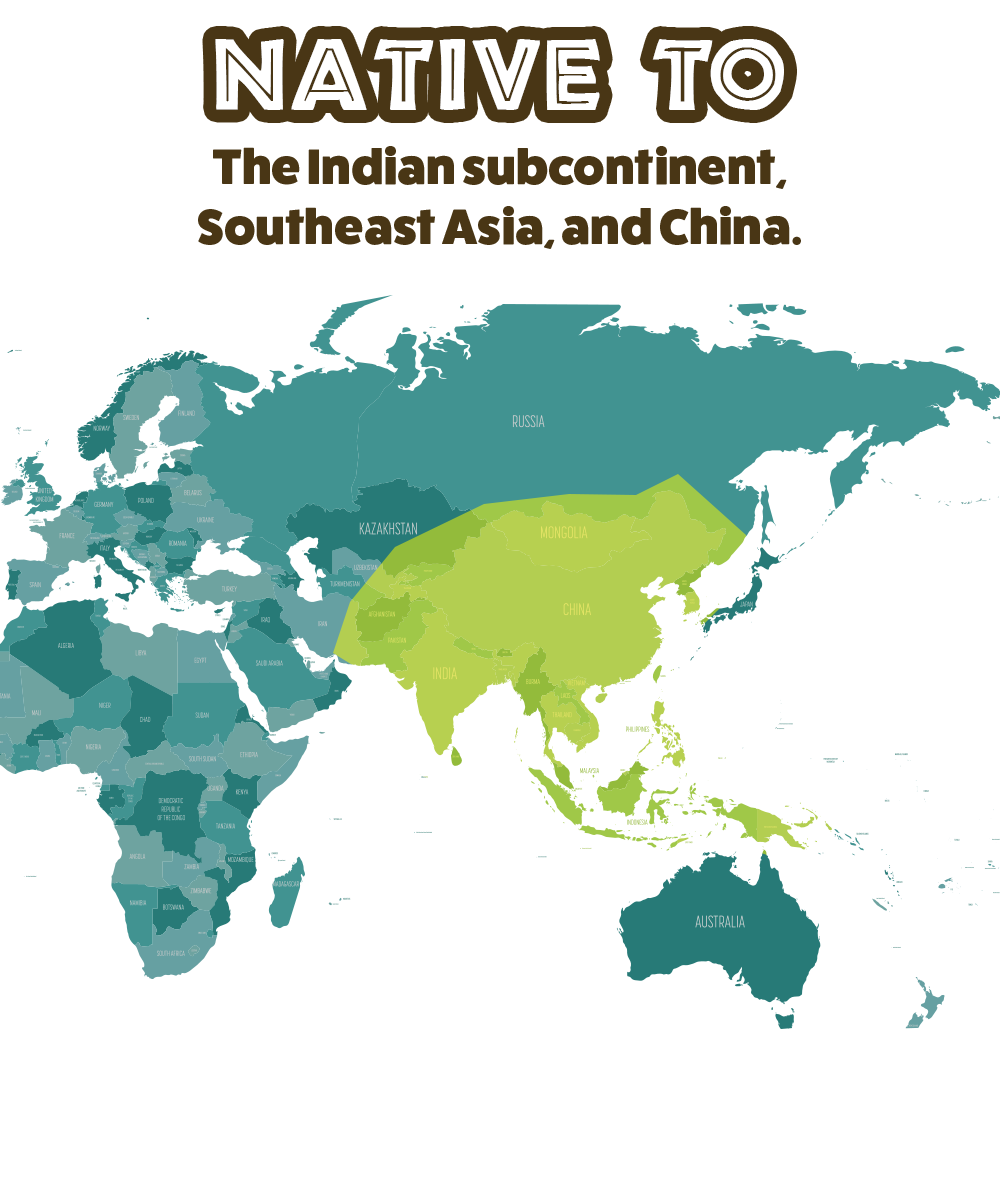
The common name “water buffalo” describes 5 different species in the genus Bubalus, native to Southeast Asia. Water buffalo originate in the Indian subcontinent, Southeast Asia, and China. Today, they are also found in Europe, Australia, North America, South America, and some African countries. Water buffalo inhabit tropical forests and wet grasslands, riverine forests, marshes, swamps. As their name suggests they require an environment with adequate water for wallowing and drinking. Some breeds are adapted to saline seaside shores and saline sandy terrain.
Fun Facts!
There are 74 breeds of domestic water buffalo
Throughout Asia, water buffalo are commonly tended by children who are often seen leading or riding their charges to wallowing places.